



What Is Actually Changing?
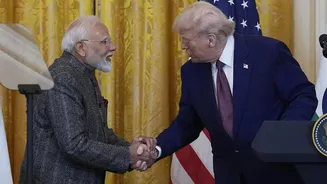
The trade relationship between the US and India is in a constant state of flux. Recent developments show a dual trend: high-level discussions aim to massively increase bilateral trade, while specific tariff policies remain a point of contention. In recent
days, US officials have reiterated an ambitious goal to grow US-India trade to over $500 billion. At the same time, a complex web of tariffs, some enacted in previous years, continues to shape the flow of goods. Earlier this year, a framework for an interim trade agreement was announced, which included the US reducing its 'reciprocal tariff' on Indian goods from 25% to 18%. However, these negotiations are ongoing, with President Donald Trump recently stating that a final deal is 'pretty close' but will be 'much different' from past agreements, adding a layer of uncertainty. The core of the issue for the tech sector revolves around these tariffs and the final terms of this evolving trade deal, which will determine duties on everything from finished electronics to critical components.
From Washington to Your Wallet
How does a tariff decision in the US affect the price tag in an Indian electronics store? It's a chain reaction. When the US imposes or adjusts a tariff on goods, it can affect products in two ways. It can raise the cost for Indian manufacturers to sell their products in the US, or it can alter the price of American components that Indian companies need for assembly. For instance, a tariff on finished Indian-made smartphones makes them more expensive for American consumers, potentially reducing export volumes for Indian companies. Conversely, if the US places duties on components it exports, like high-end semiconductors, Indian firms that import these parts to build laptops or servers face higher input costs. These costs are often passed down the supply chain, from the manufacturer to the distributor and finally to the Indian consumer in the form of higher retail prices.
Which Products Are Most at Risk?
While broad trade talks cover many sectors, the technology and electronics space is particularly sensitive. Finished goods like smartphones, which constitute a massive portion of India's electronics exports to the US, are a key focus. However, the impact goes deeper. Components such as printed circuit board (PCB) assemblies, telecom equipment, and power electronics are also vulnerable to tariff changes. There are growing concerns that future US tariffs could specifically target semiconductors, laptops, and other high-tech products, which would have a significant ripple effect on India's manufacturing sector. Even as India and the US discuss deeper collaboration in semiconductors and advanced technologies, the threat of new duties on these critical components remains a major concern for the industry.
The 'Make in India' Complication
The evolving trade terms create a complex scenario for India's 'Make in India' initiative. On one hand, higher tariffs on finished imported goods could make locally manufactured products more competitive, boosting domestic production. The Indian government is actively trying to build domestic capabilities in electronics manufacturing through initiatives like the India Semiconductor Mission 2.0. Easing trade tensions and reducing tariffs on Indian exports could expand market access and strengthen this ecosystem. On the other hand, many Indian 'manufacturers' are heavily reliant on imported components. If the cost of critical parts from the US or other nations increases due to tariff shifts, it could hurt the cost-competitiveness of assembling products in India, potentially slowing down the very manufacturing growth the government hopes to achieve.
A Global Domino Effect
The US-India trade dynamic doesn't exist in a vacuum. It is part of a larger global realignment of supply chains, often influenced by the ongoing trade tensions between the US and China. As the US has sought to reduce its reliance on Chinese manufacturing, countries like India and Vietnam have emerged as potential alternatives. Reports from 2025 indicated that India's share of the US electronics import market grew as China's share fell. This presents a major opportunity for India. However, it also means that India's trade policies are constantly being compared to those of other nations in the region. A favourable trade deal could accelerate India's rise as a global manufacturing hub, while renewed tensions or unfavourable tariff structures could see investment and production shift to competing markets.