





The Promise of a Double Harvest
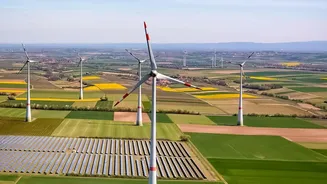
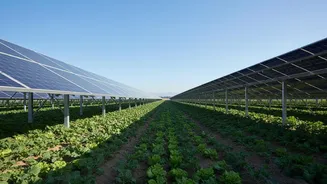
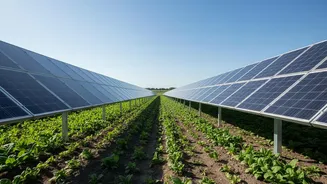
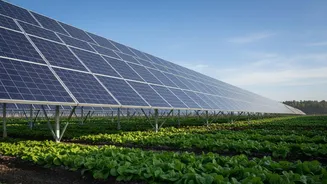
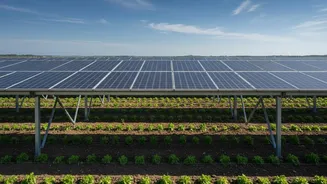
Agrivoltaics, or Agri-PV, is the practice of using the same piece of land for both agriculture and solar power generation. Solar panels are mounted on tall structures, high enough for crops to be cultivated underneath. For a land-scarce country like India,
the concept is revolutionary. It offers a way to pursue renewable energy goals without taking fertile land out of food production. For farmers, it promises two streams of income: one from selling crops and another from selling the electricity generated by the panels. Schemes like the Pradhan Mantri Kisan Urja Suraksha evam Utthaan Mahabhiyan (PM-KUSUM) are designed to help farmers become both food providers ('Annadata') and energy providers ('Urjadaata').
Why India is Pushing Agrivoltaics Now
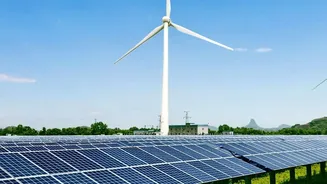
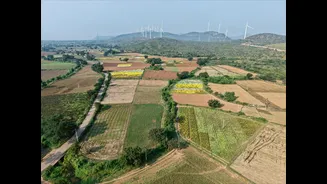
India has ambitious renewable energy targets, aiming for 500 GW of non-fossil capacity by 2030. Achieving this requires vast amounts of land, creating potential conflict with the nation's agricultural needs. Agrivoltaics presents a neat solution to this dilemma. The government’s latest push, highlighted by the announcement of PM-KUSUM 2.0 in March 2026, signals a stronger focus on this technology. The new phase is expected to have a dedicated component for Agri-PV, aiming to scale up a practice that has so far been limited to pilot projects. The goal is to make clean energy generation a part of the rural economy, reducing farmers' dependence on erratic grid power and expensive diesel for irrigation.
The Shadow Over the Crops
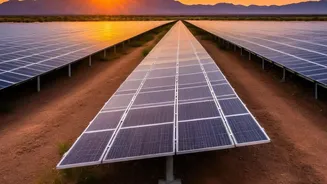
Despite its immense potential, the success of agrivoltaics hinges on solving a fundamental challenge: the shade cast by the solar panels. While the goal of a conventional solar farm is to maximize sun exposure to generate the most electricity, placing panels over a field of crops introduces a critical trade-off. Different plants have different needs for sunlight. Too much shade can drastically reduce crop yields, stunt growth, and potentially wipe out the financial gains from agriculture, defeating one of the core purposes of the system. The design of an agrivoltaics system cannot simply copy that of a standard solar plant; it must prioritise optimal conditions for the crops below.
A Cooler, Wetter Future for Some Crops
Interestingly, research shows that not all shade is bad. In India's hot and arid regions, the partial shade from solar panels can be a blessing. It reduces heat stress on plants, lowers soil temperature, and decreases water evaporation from the soil. This means some crops might need less irrigation, a significant benefit in water-scarce areas. Pioneering research by institutions like the Central Arid Zone Research Institute (CAZRI) in Jodhpur has shown promising results. Their studies indicate that the microclimate created under the panels can actually increase the yield of certain shade-tolerant or heat-sensitive crops, turning a potential problem into an advantage.
Finding the Right Balance of Light and Power
The key is customization. There is no one-size-fits-all model for agrivoltaics. Success depends on scientifically designing the system based on local climate, soil type, and the specific light requirements of the crops being grown. Researchers are experimenting with various panel configurations, such as adjusting the height and spacing of panels, using semi-transparent modules, or arranging them in checkerboard patterns to allow sufficient sunlight to reach the ground. For instance, CAZRI has experimented with different row spacings to find the optimal balance for crops like mung beans and cumin. This skill-intensive design process, which treats crop health as the central criterion, is what will ultimately determine whether India's agrivoltaics drive flourishes.