



Finding a Moving Needle in the Cosmos
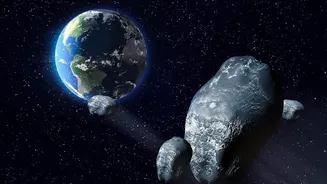
The first step in tracking a near-Earth object (NEO) is simply finding it. This enormous task is handled by dedicated survey telescopes that repeatedly scan large patches of the night sky. Programs like the Catalina Sky Survey in Arizona and Pan-STARRS
in Hawaii take multiple images of the same region minutes apart. Sophisticated software then compares these images, looking for faint points of light that have moved against the fixed background of stars and galaxies. If a moving object is detected and isn't a known body, it gets flagged as a candidate for further investigation. This initial detection is a crucial, automated process that sifts through immense amounts of data to find potential threats.
The Critical Follow-Up Observations
Once a potential NEO is spotted, the real precision work begins. A single detection isn't enough to determine an object's path; astronomers need multiple, precise measurements of its position over time. This technique is called astrometry. A global network of observatories, including professional and amateur astronomers, swings into action to perform these follow-up observations. Telescopes like those at the Cerro Tololo Inter-American Observatory in Chile are tasked specifically with this mission. Each new data point helps to refine the preliminary orbit calculation. For objects that appear to be on a trajectory that brings them very close to Earth, these follow-ups are given top priority.
From Data Points to a Trajectory Map
With enough observations, scientists can begin to map the asteroid's orbit and project its path into the future. This isn't a simple connect-the-dots exercise. It involves complex calculations based on the laws of gravity, accounting for the pull of the Sun, planets, and even other asteroids. Initially, with only a few data points, the calculated orbit has a large margin of error, represented as a cloud of possible paths. As more observations come in over days, weeks, and months, this uncertainty shrinks, and the trajectory map becomes increasingly accurate. Organizations like NASA's Center for Near-Earth Object Studies (CNEOS) continuously update these orbits with new data, calculating impact risks for the next century.
The Next Generation of Asteroid Hunters
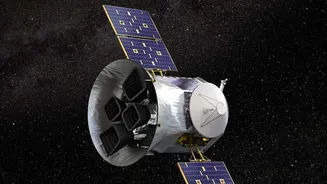
The technology for planetary defense is constantly advancing. The Vera C. Rubin Observatory in Chile, which has already discovered thousands of new asteroids in its preliminary testing phases, is set to revolutionize the field. Its massive mirror and powerful camera will allow it to detect smaller and more distant objects than ever before, dramatically increasing the catalogue of known NEOs. Joining it will be space-based telescopes like NASA's NEO Surveyor, scheduled for launch around 2027. By operating in infrared and positioned away from Earth's glare, NEO Surveyor will be especially adept at finding dark asteroids that are difficult for ground-based optical telescopes to see. This will help fulfill the mandate to find the vast majority of NEOs larger than 140 meters—the size that could cause significant regional damage.