




Confirm the Announcement Itself
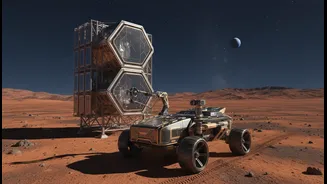
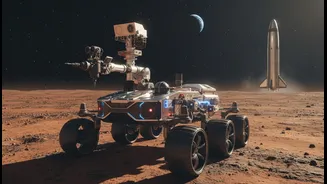
The first and most crucial step is to verify the core claim. For instance, the headline mentions "Seven Mars Robotics Contracts." A quick check of official sources reveals that NASA did recently announce contract awards to seven companies under its STRIDE
initiative to advance Mars mobility. This was announced on July 8, 2026. Before this specific news, the phrase might have been a hypothetical. Always go to the primary source. Check NASA's official website, specifically its press release section. If a major announcement about space exploration has been made, NASA will publicize it directly. If it isn't there, treat the claim with extreme skepticism.
Understand the Fine Print on the Money
Headlines often love big numbers, but contract values can be misleading. In the case of the recent seven contracts, the total potential value is approximately $17 million. The key words are "total potential value." This is not a lump sum payment. These funds are for developing concepts and prototypes for advanced mobility systems. This isn't a contract to build seven new rovers tomorrow; it's a seed investment in future technology. When you see a billion-dollar figure attached to a contract, always ask: Is this the initial award, the total value over a decade, or a ceiling that may never be reached? The details change the story significantly.
Know the Players Involved
A contract is a two-way street. Who are the companies receiving the money? In the STRIDE awards, the list includes a mix of established and emerging names in aerospace: AeroVironment, Astrobotic, Venturi Astrolab, Ground Control Robotics, Honeybee Robotics, Intuitive Machines, and MEI Technologies. Knowing the background of these companies adds crucial context. A contract awarded to an established giant like Boeing or Lockheed Martin means something different than one awarded to a newer company like Relativity Space. It’s a sign of NASA's strategy—is it relying on proven partners or fostering new commercial innovation?
Distinguish Between Partnerships and Purchases
Not all agreements are traditional contracts. NASA is increasingly using public-private partnerships (PPPs) and Space Act Agreements. Under these models, the company often shares costs and risks in exchange for NASA's expertise and a high-profile mission. For example, a recent mission involves NASA providing the science instruments while a commercial partner, Relativity Space, provides the rocket and spacecraft to get them to Mars. This is different from NASA simply buying a finished product. It's a collaboration. Understanding this distinction is key to grasping how NASA is evolving its approach to space exploration, blending agency-led science with commercial capabilities.
Check the Source of the News
Where did you see the information? Was it from a NASA press release, a reputable aerospace trade publication, a major international news organization, a niche blog, or a random account on social media? Information gets distorted as it moves further from the primary source. Misinformation about NASA is common, with conspiracy theories ranging from faked landings to cover-ups of alien life. While contract news is less sensational, it can be twisted to fit a narrative—either of government waste or of technological breakthroughs that are years from reality. Stick to sources with a track record of accurate science and business reporting.
Appreciate the Broader Strategy
No contract exists in a vacuum. These recent awards are part of NASA's wider Mars Exploration Program and its goal to develop technologies for more complex missions, including those that might support eventual human exploration. The aim of the STRIDE initiative is to develop systems that can access challenging Martian terrain that current rovers can't reach. These small technology development contracts are stepping stones. They fit into a larger mosaic that includes major missions like the Mars Sample Return, orbiters, and the active rovers Perseverance and Curiosity. A single announcement is just one piece of a decades-long strategy to explore the Red Planet.