



The New Lunar Gold Rush
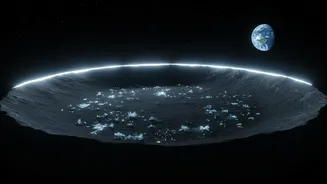
For decades, scientists theorized that water might exist in the coldest, darkest craters of the Moon's poles. India's Chandrayaan-1 mission in 2008 provided the first direct evidence, transforming our understanding of the lunar environment. This wasn't
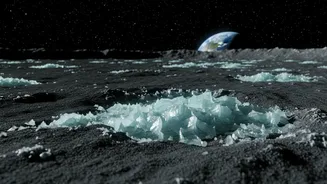
just a scientific curiosity; it was the discovery of a resource more valuable than gold. This water ice, preserved for billions of years in permanently shadowed regions (PSRs) where temperatures plummet to -230°C, can be a game-changer. When processed, it can provide drinking water and breathable oxygen for astronauts. More importantly, it can be split into its constituent elements—hydrogen and oxygen—to create rocket propellant. This capability to 'refuel' in space could slash the costs of deep-space missions, making the Moon a critical launchpad for journeys to Mars and beyond.
ISRO’s Strategic Blueprint
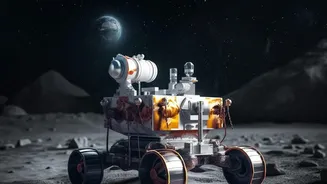
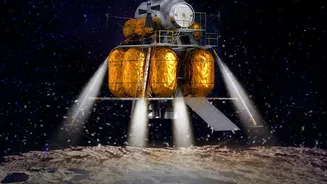
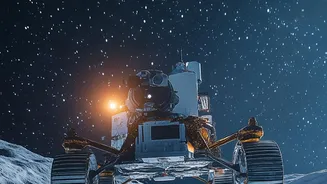
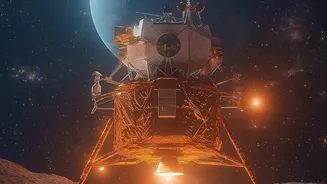
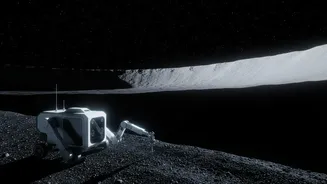
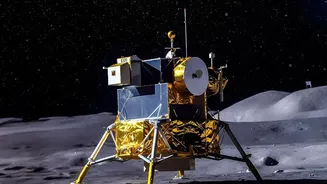
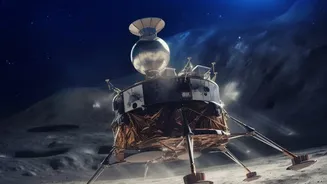
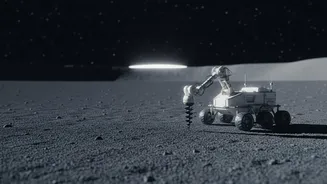
Building on the successes of its Chandrayaan program, ISRO is strategically focused on 'In-Situ Resource Utilization' (ISRU), which means using resources found on-site instead of hauling them from Earth. The centrepiece of this strategy is the Lunar Polar Exploration Mission (LUPEX), a joint project with the Japan Aerospace Exploration Agency (JAXA) planned for around 2028. This ambitious mission will see an Indian-built lander deliver a Japanese rover to the lunar south pole. The rover, equipped with instruments from ISRO, JAXA, NASA, and ESA, is designed to drill up to a few metres beneath the surface. Its primary objective is to locate, quantify, and analyze the water ice, providing crucial data on its accessibility and purity. Data from Chandrayaan-2's orbiter has already helped identify promising areas with subsurface ice deposits, suggesting there may be 5 to 8 times more ice below the surface than on it.
The Deep Freeze Challenge
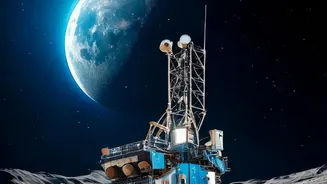
Harvesting lunar ice is an immense engineering challenge. The permanently shadowed craters are among the most inhospitable environments in the solar system. The extreme cold can make machinery brittle and seize up, while the perpetual darkness means solar-powered rovers are not viable, necessitating other power sources. The ice isn't a clean, solid block but is mixed with abrasive lunar dust, known as regolith. To tackle this, ISRO and other global agencies are developing new technologies. This involves designing robotic systems capable of operating in extreme cold, drilling into the frozen, rocky soil, and then heating the excavated material to sublimate the ice—turning it directly into vapour for collection. This vapour must then be captured and condensed back into liquid water. The entire process has to be done with high efficiency and reliability, far from any human help.
More Than Just Water
The focus on extracting lunar water is about building a sustainable future in space. Establishing a permanent human presence on the Moon, a key goal of global space agencies, is only feasible if astronauts can live off the land. Mastering water extraction is the first and most critical step. Beyond life support, the oxygen produced from water can be used for breathing, while the leftover metals and minerals in the regolith could become raw materials for construction, using 3D printing to build habitats and infrastructure. This vision turns the Moon from a temporary outpost into a self-sustaining settlement and a bustling economic hub. For India, a successful water extraction mission would not only be a monumental scientific achievement but would also secure a key role in the emerging cislunar economy.
India’s Place in the Cosmos
ISRO's lunar ambitions are placing India at the heart of a new global space race, but one that is increasingly collaborative. The LUPEX mission is a prime example, pooling Indian and Japanese expertise, with contributions from the US and Europe. Following its historic Chandrayaan-3 landing and with plans for a crewed lunar mission by 2040, India is signaling its intent to be a major player in shaping humanity's multi-planetary future. By focusing on the critical technology of water extraction, ISRO is not just exploring the Moon; it's developing the foundational capabilities that will define the next century of space exploration. This move from pure science to resource utilization marks a pivotal moment, positioning India as a leader in the quest to unlock the economic and strategic potential of our celestial neighbour.