



The Sun’s Hidden Temper
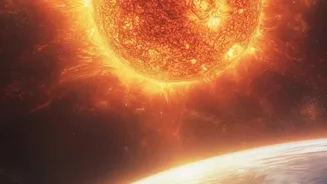
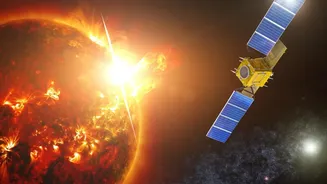
The Sun, our life-giving star, has a volatile side. It periodically unleashes enormous bursts of energy and particles into space. These events, known as solar flares and coronal mass ejections (CMEs), create what scientists call space weather. When a powerful
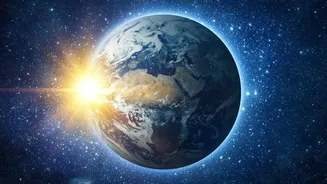
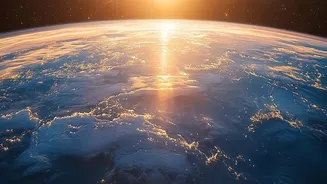
CME is aimed at Earth, it sends a wave of charged particles hurtling towards us. While our planet's magnetic field deflects most of this solar wind, a sufficiently intense storm can overwhelm our natural defences. This interaction can generate brilliant auroras, but it can also induce powerful electrical currents on Earth, posing a direct threat to the technological backbone of modern society.
A Digital House of Cards?
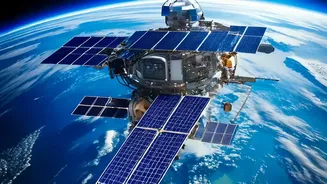
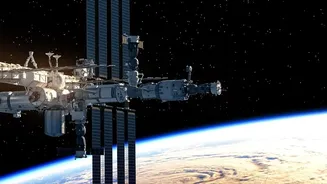
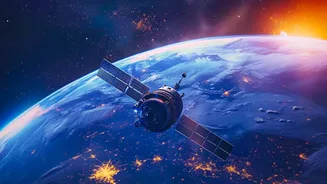
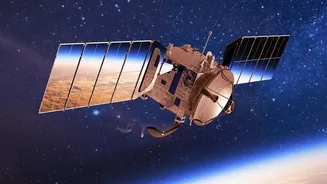
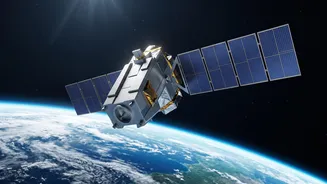
The greatest danger from a severe solar storm is not to humans directly, but to the infrastructure that supports our lives. The long conductive wires of our power grids can act like giant antennas, picking up geomagnetically induced currents (GICs). These currents can overload and permanently damage high-voltage transformers—critical components that are difficult and time-consuming to replace. A major storm could trigger cascading blackouts lasting weeks or months. Satellites are also highly vulnerable; the increased radiation can fry their sensitive electronics, and atmospheric drag can cause them to fall out of orbit. This would cripple GPS, global communications, and even financial transactions. Some scientists have also warned that the repeater systems on undersea internet cables could be damaged, leading to an 'internet apocalypse'.
Racing the Solar Wind
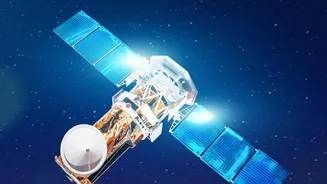
Today, our ability to forecast these events is limited. Space weather prediction is considered by some to be decades behind terrestrial weather forecasting. Agencies like the US National Oceanic and Atmospheric Administration's (NOAA) Space Weather Prediction Center (SWPC) monitor the Sun continuously using a fleet of satellites. When a CME erupts, they can track its trajectory. Depending on its speed, it can take anywhere from one to three days to reach Earth, giving us a window to prepare. However, some of the most dangerous particles can arrive in just minutes. This short lead time is a major challenge, providing only a brief warning before potential impacts begin to be felt. Current forecasts offer probabilities, not certainties, about a storm's strength and exact arrival time.
The Quest for a Better Crystal Ball
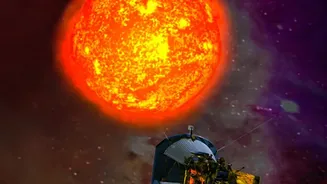
Improving these forecasts is a global priority. Scientists are working on new models, some powered by artificial intelligence, to get more accurate and longer-range predictions. Recently, researchers at the Indian Institute of Astrophysics helped develop a new 3D model that provides a clearer picture of how these eruptions form, which could help forecast their arrival and impact. The goal is to move from a 1-3 day warning to perhaps a week or more, and to better predict the intensity of an incoming storm. This involves launching new, more advanced observation satellites placed at strategic points in space to get a better view of the Sun and the solar wind heading our way.
From Warning to Action
What would we do with a better forecast? A reliable, long-range warning would be transformative. Utility companies could proactively protect the power grid by reducing loads, rerouting power, or even temporarily taking sensitive transformers offline to prevent damage. Satellite operators would have time to put their spacecraft into a protective 'safe mode,' shielding their electronics from the worst of the radiation. Airlines could reroute flights away from polar regions, where radiation exposure is highest during a storm. Emergency services and governments would have crucial time to prepare for potential disruptions to communication and supply chains. In essence, a better forecast turns a potential catastrophe into a manageable emergency.