




The Unstoppable Rise of Machine Sight
There's no denying the astonishing progress of AI, particularly in computer vision. Machines can now identify objects, faces, and even diseases in medical scans with an accuracy that often rivals, and sometimes surpasses, human ability. This form of AI, powered
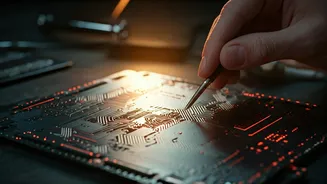
by deep learning and massive datasets, excels at pattern recognition. From autonomous vehicles navigating complex city streets to quality control systems on production lines that spot microscopic defects, AI's 'sight' is becoming a cornerstone of modern industry. The growth is explosive, with the computer vision market projected to be worth billions. In India, companies are rapidly adopting these technologies to make their operations faster, better, and cheaper, transforming everything from software development to customer service.
Seeing Is Not the Same as Understanding
But here is the critical distinction: processing pixels is not the same as perceiving reality. An AI can identify every object in a room but lacks a true understanding of their context or relationship. It can recognise a stop sign in millions of images but has no innate concept of traffic safety or the human consequences of ignoring it. This gap is rooted in how AI learns. Its 'creativity' is based on recombining existing data it was trained on, whereas human creativity stems from a rich blend of lived experience, imagination, cultural nuances, and emotion. Recent studies have even shown that while AI models get better at recognition tasks, their underlying visual strategies are diverging from how the human brain works, finding non-biological shortcuts to get the answer. Even young children often outperform sophisticated AI in robust visual object recognition because our perception is far more data-efficient and context-aware.
The Human Edge: Strategic and Creative Vision
This brings us to the other, more profound meaning of 'vision'—the ability to look beyond the data, imagine what doesn't exist, and set a long-term strategic direction. This is where humans currently hold an undisputed lead. Developing a corporate strategy is not just statistical analysis; it involves intuition, navigating ambiguity, understanding organisational culture, and inspiring people. AI is a powerful tool for analysing the past, but it cannot create a 'model of the world' to truly think or generate audacious, forward-thinking strategies from scratch. It struggles with out-of-the-box thinking because it is constrained by the data it was trained on. Leadership decisions about purpose, values, and long-term direction remain a fundamentally human domain, even if they are informed by AI-generated insights.
The Indian Context: Upskilling for a New Era
In India, the AI wave is creating a paradigm shift in the workforce. While some roles may be displaced, many more new ones are expected to be created, demanding skills in data analysis, AI specialisation, and cybersecurity. The conversation across Indian enterprises is no longer about if they should adopt AI, but how. However, a key challenge is that many organisations are trying to build a 21st-century AI economy on 20th-century infrastructure. Recognizing this, professionals across the country are proactively upskilling, with a significant number of workers already incorporating AI into their roles. The future of work in India will not be about competing with AI, but about developing the uniquely human skills—critical thinking, creativity, and strategic judgment—that AI cannot replicate.
A Partnership for the Future
The most productive path forward is not a competition between human and machine, but a powerful collaboration. This concept, often called 'augmented intelligence', uses AI to enhance human capabilities, not replace them. By letting AI handle the repetitive, data-heavy tasks, we free up human intellect for what it does best: creativity, strategic problem-solving, and emotional connection. AI can analyse market trends and predict outcomes, but a human leader must weigh those insights against the company's values and long-term vision. This virtuous cycle, where better AI tools help us think better, and our improved thinking helps us build better AI, is the true promise of this technological revolution. It's a future where AI provides the sight, but humans provide the vision.