






Why Grand Plans Often Fail
The most common reason people give up on exercise is the feeling of being overwhelmed. The pressure to commit to hour-long gym sessions multiple times a week can be daunting, especially with a busy schedule. This 'all or nothing' mindset creates a high
barrier to entry. If you miss one long workout, it feels like a major failure, making it easier to skip the next one and the one after that. Before you know it, the routine is broken. The problem isn't a lack of desire, but a strategy that demands too much, too soon. It’s hard to build a habit when the first step feels like a marathon. The key isn't to find more time or motivation, but to lower the bar for success so significantly that you can't fail.
The Power of a Ten-Minute Start
Enter the 10-minute workout. It sounds too good to be true, but its power lies in psychology. A short workout removes the most common excuse: 'I don't have time'. Everyone can find 10 minutes. This small commitment transforms exercise from a monumental task into a manageable daily action. The goal is not to achieve peak fitness in one session, but to build the habit of showing up. Psychologists refer to this as the 'habit loop': a cue, a routine, and a reward. A 10-minute workout creates an easy routine, and the reward is the feeling of accomplishment and the release of mood-boosting endorphins, which reinforces the behavior. Science supports this, showing that consistent, short bursts of activity are highly effective for building the automaticity that defines a true habit.
More Than Just a Start
While 10 minutes is a great starting point for building a habit, research shows it's also genuinely beneficial for your health. Studies have demonstrated that short, daily workouts can improve cardiovascular health, help regulate blood sugar, lower blood pressure, and even contribute to a longer life. One study found that adding just 10 minutes of moderate activity per day could be linked to 7% fewer deaths per year. Another found that three 10-minute walks were more effective at controlling high blood pressure than one 30-minute walk. These 'micro-workouts' or 'exercise snacks' add up, challenging the old belief that exercise only 'counts' if it's a long, continuous session.
Your First Ten-Minute Workout
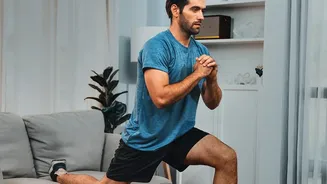
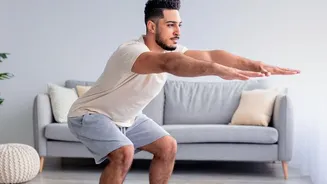
The best workout is one you'll actually do, but keeping it simple is key. You don't need any equipment to start. A simple and effective 10-minute bodyweight circuit could look like this: Perform each exercise for 40 seconds, followed by 20 seconds of rest before moving to the next. Complete two full rounds. 1. Squats: A foundational move for lower body strength. 2. Push-ups: Modify by doing them on your knees if needed. Engages the chest, shoulders, and core. 3. Mountain Climbers: A great cardio and core stability exercise. 4. Lunges: Step forward and alternate legs to work on balance and leg strength. 5. Jumping Jacks: A classic way to get your heart rate up quickly. This entire routine targets major muscle groups and provides both strength and cardiovascular benefits in a short, efficient burst.
Making Your New Habit Stick
Once you start, a few strategies can help solidify your 10-minute habit for the long term. First, 'habit stack' by linking your workout to an existing daily routine, like doing it right after you brush your teeth in the morning or before you turn on the TV in the evening. Second, schedule it. Blocking out that 10-minute slot on your calendar makes it a non-negotiable appointment. Finally, focus entirely on consistency, not perfection or intensity. The goal for the first month isn't to get stronger or faster; it's simply to not miss a day. Once the habit is firmly established, you can think about extending the time or increasing the intensity. But the foundation is built on the simple victory of showing up for those 10 minutes, every single day.