




Why Moisture is the Enemy of Crunch
To understand the solution, we first need to understand the problem. The satisfying crunch of fried food is a result of rapid dehydration. When food hits hot oil, the moisture on its surface instantly vaporizes, turning into steam and creating a dry,
rigid crust. However, if an ingredient like fresh coriander is carrying too much water, this process is sabotaged. Instead of the water flashing off, it creates a steam pocket around the food, effectively steaming the batter from the inside rather than frying it. This internal steam prevents the exterior from becoming truly crisp. Moisture migration is another factor; after cooking, any remaining water inside the food will slowly move towards the dry outer layer, turning your once-crispy creation soft. The battle for crunch is, therefore, a battle against moisture.
The Simple Paper Towel Fix
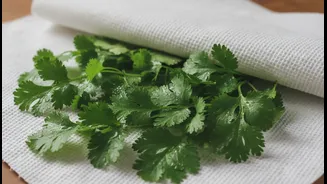
This is where paper towels become your most valuable kitchen tool. While a salad spinner is great for an initial pass, it often can't get delicate herbs completely dry without bruising them. The paper towel method is both gentler and more effective. First, wash your coriander leaves thoroughly in cool water to remove any grit. Give the bunch a gentle shake over the sink to get rid of large water droplets. Next, lay a few sheets of paper towel on your work surface. Spread the coriander sprigs in a single layer across the towels. Place another layer of paper towels on top. Gently roll the towels and coriander together, like a Swiss roll. Apply light pressure along the length of the roll with your palms. You'll feel the paper towels wicking away the excess moisture. Unroll and check the herbs; they should feel noticeably drier but not crushed. For very wet herbs, you might need to repeat the process with a fresh set of dry paper towels. This technique ensures the leaves are perfectly dry, ready to be chopped and added to your batter without introducing any crunch-killing water.
Perfecting Your Coriander Fritters
Now that your coriander is perfectly prepped, you can build a better fritter. This technique is especially crucial for recipes like Kothimbir Vadi, a classic Maharashtrian snack where coriander is the star. Whether you're using a batter made from besan (chickpea flour), plain flour, or a mix, the principle remains the same. Once your beautifully dry coriander is chopped and mixed in, the batter itself will be less watery. This allows it to fry up golden and crisp. When adding the fritter mix to the hot oil, be careful not to overcrowd the pan. Cooking in batches ensures the oil temperature stays high, promoting that quick dehydration essential for a crunchy exterior. Once fried, drain the fritters on a wire rack rather than a paper towel-lined plate. This allows air to circulate underneath, preventing the bottoms from steaming and going soft.
Beyond Fritters: A Universal Technique
The wisdom of drying your herbs doesn't end with fritters. This paper towel method is a game-changer for any dish where you want the vibrant flavour of fresh herbs without the added moisture. Think about it: when making mint chutney or raita, drier mint leaves will give you a thicker, more flavourful result. When adding finely chopped parsley to meatballs or kebabs, removing the water ensures a better bind and texture. This technique is also invaluable for storing herbs. Wrapping washed and dried greens in paper towels before placing them in a bag in the refrigerator can extend their life for days, keeping them fresh and ready to use. By mastering this simple step, you're not just making better fritters; you're adopting a fundamental cooking practice that elevates countless dishes.