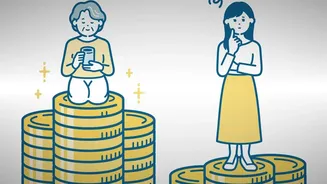







The Old Dream Meets a New Reality
The traditional markers of success feel increasingly out of reach for many young people today. Faced with sky-high housing costs, persistent inflation, and significant student debt, the path their parents took to prosperity often seems blocked. A 2026
study noted that many young adults, especially in major urban centres, have had to give up on the goal of homeownership for financial reasons. This economic reality has forced a fundamental rethink. Instead of chasing a dream that feels unattainable, many in Gen Z are choosing to redefine the dream itself. They witnessed older generations burn out from a 'hustle culture' that promised everything but often delivered anxiety. As a result, they are trading the relentless pursuit of accumulation for a life built around a different set of values.
Work-Life Balance Is the New Wealth
For a significant portion of Gen Z, time is more valuable than money. Across multiple surveys, they consistently rank work-life balance as a top priority when choosing a job, often placing it ahead of a high salary. In one landmark study, it was the first time in over two decades that work-life balance surpassed pay as the primary motivator for workers across all age groups, a shift driven heavily by the youngest members of the workforce. This generation is not afraid to leave a job that doesn't align with their values or respect their personal time. They seek flexibility, mental health support, and a sense of purpose from their careers, rejecting the notion that burnout is a necessary price for success. This sentiment is so strong that many are willing to accept lower pay for a job that offers better personal time and peace of mind.
Experiences and Well-being Over Everything
The new definition of wealth is less about what you own and more about how you feel. Gen Z prioritises mental and emotional health, seeing them as intertwined with financial health. This has fueled trends like the 'soft life,' which champions a low-stress existence focused on personal peace and well-being over constant productivity. This mindset doesn't mean forgoing financial responsibility. Instead, it has given rise to concepts like 'soft saving,' where the goal is to balance saving for the future with enjoying life in the present. While they are actively interested in improving their financial literacy, they are also clear that they would rather enjoy a better quality of life now than hoard cash for a distant future. Success is increasingly measured not by a bank balance, but by the ability to live comfortably and without constant financial anxiety.
The Social Media Paradox
Social media plays a complex role in this generational shift. On one hand, platforms like Instagram and TikTok can fuel what some call 'money dysmorphia,' where constant comparison to curated online lifestyles leads to feelings of financial inadequacy, even when one's finances are stable. Studies show that nearly half of Gen Z and millennials admit to being obsessed with the idea of being rich, which can create significant pressure. On the other hand, these same platforms provide a space to critique and reject these pressures. Trends like 'loud budgeting' and discussions about the 'soft life' originate and spread online, creating communities that validate a different set of priorities and offer a counter-narrative to relentless consumerism. It's a space where aspirations for freedom and security clash with the curated perfection of influencer culture.