

Why Your Spine Loves This Movement
Our spines are designed to move in multiple directions, yet modern life often confines us to one: hunched forward. Prolonged sitting at desks or looking at screens leads to stiffness and imbalance. The Cat-Cow pose, or Marjaryasana-Bitilasana, directly
counters this by moving the spine through its full range of flexion (rounding) and extension (arching). This dynamic movement helps improve flexibility, relieves tension in the back and neck, and boosts circulation to the spinal discs. Think of it as essential maintenance for your back, restoring mobility and promoting better posture.
Flexion and Extension Explained
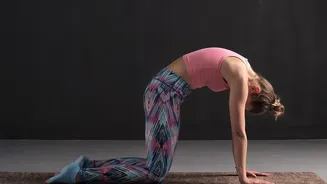
Understanding the two core components of the pose is crucial. Spinal flexion happens during the 'Cat' phase. As you exhale and round your back towards the ceiling, you are flexing your spine. This stretches the muscles along your back, particularly the erector spinae, and can help alleviate stress. Spinal extension occurs during the 'Cow' phase. As you inhale, drop your belly, and lift your chest and tailbone, you are extending your spine. This movement lengthens the front of the body, including the chest and abdominal muscles. The gentle, rhythmic transition between these two opposing movements is what makes the pose so beneficial for overall spinal health.
A Step-by-Step Guide
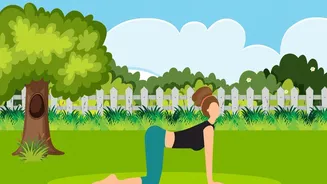
To perform Cat-Cow correctly, start in a 'tabletop' position on all fours. Your hands should be directly under your shoulders and your knees directly under your hips, about hip-width apart. Your spine should be in a neutral, straight line. On an inhale, move into Cow Pose: drop your belly towards the floor, lift your chest forward, and raise your tailbone. Keep your gaze forward without crunching your neck. On an exhale, transition to Cat Pose: press the floor away with your hands, round your spine toward the ceiling, tuck your tailbone, and let your head hang heavy. The key is to link the movement with your breath, flowing smoothly for 5-10 rounds.
Common Mistakes to Avoid
To get the most from this pose and prevent strain, watch for a few common errors. First, avoid moving too quickly; the movement should be slow and deliberate, guided by your breath. Second, don't crane your neck. In Cow Pose, the neck should be a natural extension of the spine's arch, not thrown back aggressively. In Cat Pose, the head should drop naturally. Third, ensure your wrists are directly under your shoulders and knees are under your hips to maintain a stable base and avoid unnecessary joint pressure. Finally, initiate the movement from your pelvis and tailbone, letting it ripple up the spine, rather than leading with your head.
Modifications for Every Body
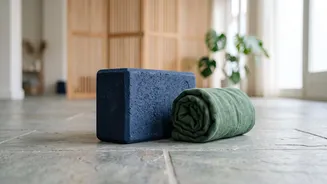
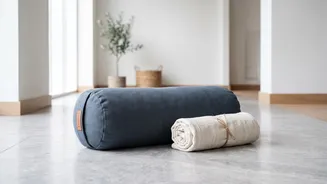
Cat-Cow is highly adaptable. If you have sensitive knees, place a folded blanket or cushion underneath them for support. For wrist pain, you can come down onto your forearms or make fists with your hands instead of having your palms flat. Another excellent option is to perform the pose while seated in a chair. Sit with your feet flat on the floor and hands on your knees, then move through the same spinal flexion and extension. This variation removes pressure from both the wrists and knees while still providing the core benefits of spinal mobilisation.