








The Anatomy of a Desk-Bound Body
Our bodies are designed for movement. When you sit for extended periods, a cascade of negative effects begins. Prolonged sitting can lead to tight hip flexors, weakened glute and core muscles, and poor posture. This imbalance puts extra strain on your
spine, neck, shoulders, and even your knees. Without regular activity, the synovial fluid that lubricates your joints doesn't circulate effectively, leading to stiffness and that familiar creaky feeling when you finally stand up. This immobility can contribute to poor circulation, muscle weakness, and an increased risk of chronic pain and joint issues over time.
Master Your Workspace: Ergonomics 101
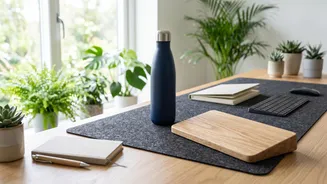
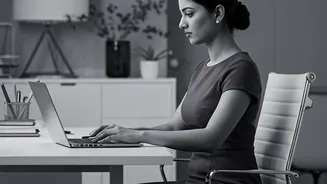
Before you even think about exercise, optimising your desk setup is a crucial first step. Proper ergonomics helps maintain a 'neutral posture', where your joints are naturally aligned and stress is minimised. Start with your chair: adjust it so your feet are flat on the floor and your knees are level with or slightly below your hips. Your monitor should be at arm's length, with the top of the screen at or just below eye level to prevent neck strain. Position your keyboard and mouse to allow your elbows to rest close to your body at roughly a 90-degree angle, keeping your wrists straight and supported. These simple adjustments can dramatically reduce the daily strain on your joints.
The Power of 'Movement Snacks'
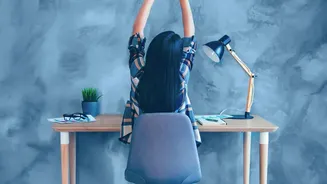
You don't need a full gym session to counteract the effects of sitting. The key is to break up long periods of inactivity with short, frequent bursts of activity known as 'movement snacks'. These are brief moments of physical activity, from 30 seconds to five minutes, sprinkled throughout your day. Standing up to stretch every 30 to 60 minutes can improve blood flow, decrease stiffness, and reduce metabolic risks. Research shows that these micro-breaks boost energy, improve focus, and are easier to stick with than longer, less frequent workouts. Aim for three to five short movement breaks across an eight-hour workday to make a significant difference.
Simple Stretches You Can Do Now
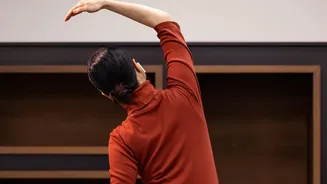
Integrating simple movements right at your desk can provide immediate relief. Try these exercises: Trunk Rotation: Sit straight and cross your arms over your chest. Gently twist your upper body from side to side without moving your hips. This helps prevent a stiff back. Shoulder Blade Squeeze: While sitting or standing, bend your arms at a 90-degree angle and slowly squeeze your shoulder blades together. Hold for a few seconds to improve posture and reduce back strain. Hip Flexor Stretch: Sit sideways on your chair and extend one leg back, feeling a gentle stretch in the front of your hip. Hold for a few breaths and repeat on the other side. This counteracts tightness from sitting. Neck Retractions: Sit tall and gently draw your head straight back, as if making a double chin. This simple move helps correct forward head posture caused by looking at a screen. * Seated Marching: Sit at the edge of your chair and march in place, lifting your knees high. It improves circulation and range of motion.
Beyond the Desk
While desk-based movements are vital, your overall activity level also plays a huge role. Make movement a non-negotiable part of your routine. Opt for the stairs instead of the lift. Take short, brisk walks during your lunch break or while on phone calls. Engaging in regular, joint-friendly activities like walking, swimming, or yoga outside of work strengthens the muscles that support your joints, providing better stability and reducing strain. Staying hydrated and maintaining a healthy diet are also essential for overall joint health. Remember, the goal is not just to exercise more, but to sit less. Every little bit of movement adds up to a healthier, more comfortable body.