







The Growing Threat on the Coast
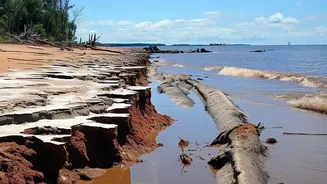
India’s eastern coast, home to millions, is no stranger to the fury of cyclones. States like Odisha, Andhra Pradesh, and West Bengal lie in the path of storms that form in the Bay of Bengal, a region witnessing increased cyclone intensity due to climate
change. The real danger often arrives after the wind, in the form of a storm surge—a massive wall of water pushed inland, causing widespread flooding, destroying homes, contaminating agricultural land with salt, and threatening lives. With sea levels rising, these surges are becoming more destructive, pushing further inland and overwhelming conventional coastal defences. This persistent threat has made finding sustainable and effective protection a matter of urgent survival for countless coastal villages.
Nature’s Ingenious Defence System
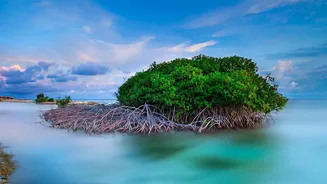
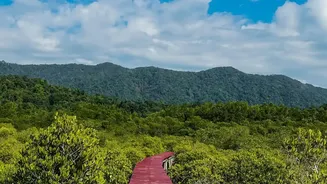
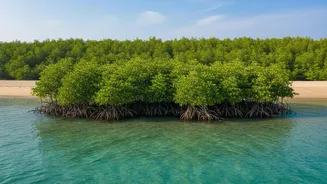
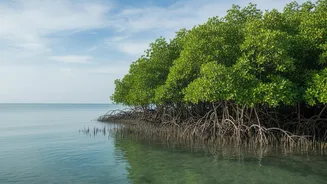
Enter the mangrove, a humble coastal tree with an extraordinary ability to protect the land. These unique forests, which thrive in the salt-rich border between land and sea, act as natural bio-shields. Their dense, tangled root systems are masterpieces of natural engineering. They grip the soil, preventing coastal erosion, and act like a giant sponge, absorbing and dissipating the energy of incoming waves. Studies have shown that a significant belt of mangroves can reduce the height of a storm surge by 50% or more, drastically lowering its destructive power before it reaches inhabited areas. Beyond storm protection, these forests serve as vital nurseries for fish and crabs, support immense biodiversity, and act as powerful carbon sinks, capturing and storing vast amounts of carbon dioxide.
Communities Leading the Charge
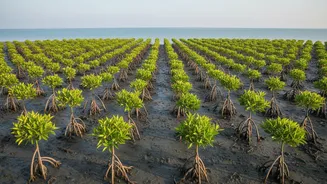
The real story of this green revolution is not just about the trees, but the people planting them. Across the eastern seaboard, from the Sundarbans in West Bengal to the deltas of Odisha and Andhra Pradesh, local communities are at the forefront of mangrove restoration. Often led by women’s self-help groups, these initiatives are transforming both landscapes and livelihoods. In villages like Rangabelia in the Sundarbans, women have organized themselves into 'Green Brigades', establishing nurseries, planting saplings on barren mudflats, and fencing the young trees to protect them from cattle. This hands-on approach ensures community ownership and leverages local ecological knowledge for higher survival rates. What began as small conservation efforts has grown into a powerful movement of collective action.
Weaving Livelihoods with Conservation
For these initiatives to be truly sustainable, they must support local economies. Many projects skillfully integrate conservation with livelihood generation. By restoring the mangroves, communities are also reviving the fish, crab, and shrimp populations that depend on these habitats, providing a direct economic benefit. Some groups have even ventured into eco-tourism, like the Swamini Self-Help Group in Maharashtra, whose model is being studied for replication in Odisha and Andhra Pradesh. These women lead guided boat tours, educating visitors about the importance of the mangrove ecosystem. This linkage is crucial: when conservation provides tangible income, communities become the most dedicated guardians of the forest.
Overcoming Hurdles and Building a Future
The path to restoring these vital ecosystems is not without challenges. Projects face hurdles like unpredictable funding, conflicts over land use (especially with aquaculture), and ensuring the long-term survival of the saplings. However, growing recognition of their importance is bringing crucial support. The Indian government's MISHTI (Mangrove Initiative for Shoreline Habitats & Tangible Incomes) scheme, launched in 2023, aims to bolster these efforts by converging funds from programs like MGNREGS and involving local communities in a more structured way. By combining government support with the grassroots energy of local communities and NGOs, these bio-shield initiatives offer a scalable, nature-based blueprint for coastal resilience.