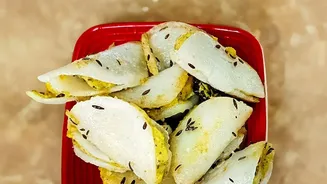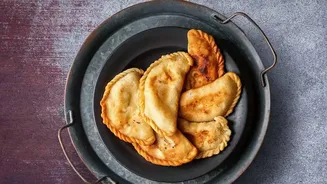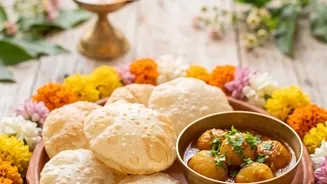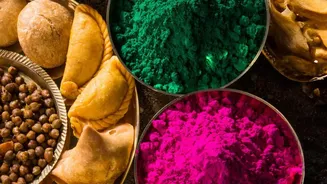




The aroma of freshly fried gujiya is the scent of celebration. This guide breaks down every step, from the crumbly mawa filling to the artful fold, ensuring your homemade sweets are perfectly crisp and delicious every single time.
Crafting the Perfect Shell
The foundation of a great
gujiya is its shell: it should be crisp and flaky, with those characteristic little bubbles, but not hard or oily. The secret lies in the dough. For this, you will need all-purpose flour (maida), a generous amount of ghee, and cold water. The key is the 'moyan' or the fat incorporated into the flour. Rub the ghee into the flour with your fingertips until the mixture resembles breadcrumbs. When you press a handful, it should hold its shape. This process is crucial as it prevents gluten from developing too much, which is what ensures a flaky, melt-in-the-mouth texture rather than a chewy one. Once the ghee is incorporated, add cold water little by little to form a stiff, tight dough. Using cold water helps keep the ghee solid, creating pockets that will turn into flaky layers when fried. Knead the dough for just a few minutes until it comes together, then cover it with a damp cloth and let it rest for at least 30 minutes. This resting period allows the flour to hydrate fully and makes the dough easier to roll.
The Rich and Nutty Filling
While the dough rests, you can prepare the heart of the gujiya: its sweet, aromatic filling. The traditional and most beloved filling is made with khoya, also known as mawa, which is dried evaporated milk solids. To begin, crumble the khoya and lightly roast it in a pan over low heat for a few minutes until it becomes aromatic and slightly changes colour. This step removes any raw smell and enhances its nutty flavour. Take it off the heat and let it cool down completely. Once cool, mix in powdered sugar. It is vital that the khoya is not hot when you add the sugar, or the sugar will melt and make the filling watery. Now, it is time to add texture and flavour. A classic combination includes finely chopped almonds, cashews, and pistachios, along with desiccated coconut. For aroma, a generous pinch of green cardamom powder is essential. Some recipes also call for semolina (sooji), which is roasted in ghee until fragrant before being added to the filling. This adds a lovely grainy texture and helps absorb any excess moisture.
The Art of Filling and Folding
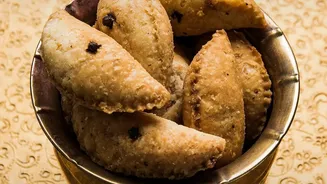
This is the stage where the magic happens. After the dough has rested, knead it once more for a minute to smoothen it out. Divide it into small, equal-sized balls. Take one ball and roll it into a thin circle, about 4-5 inches in diameter. Try to keep the edges slightly thinner than the centre. Place a spoonful of the prepared filling onto one half of the circle, leaving a small border around the edge. Be careful not to overfill, as this can cause the gujiya to burst open while frying. To seal it, dip your finger in a small bowl of water and moisten the edges of the dough. Fold the other half over the filling to create a semi-circle, and press the edges firmly to seal. You can use a fork to press down along the sealed edge for a simple design, or use a special gujiya mould for a perfect shape every time. For the traditional hand-folded design, you can pleat the edge by pinching and folding it over itself to create a beautiful, rope-like pattern known as 'gothna'. Place the finished gujiyas on a tray and keep them covered with a damp cloth to prevent them from drying out while you shape the rest.
Frying to Golden Perfection
The final step is frying, which requires patience and temperature control. Heat ghee or a neutral oil in a deep kadai or pan over a medium flame. The ideal temperature is crucial; if the oil is too hot, the gujiya will brown quickly on the outside but remain raw inside, and the shell will not be crisp. If it is not hot enough, the gujiyas will soak up too much oil and become greasy. To test the temperature, drop a small piece of dough into the oil. It should sizzle and rise to the surface slowly. This indicates the oil is ready. Gently slide a few gujiyas into the pan, ensuring not to overcrowd it. Fry them on a low to medium-low flame, turning them occasionally, until they are a beautiful golden brown on all sides. This slow frying process is what creates the coveted bubbles on the surface and ensures a uniformly crisp shell. Once they are perfectly golden, remove them with a slotted spoon and place them on a wire rack or paper towel to drain any excess oil.