





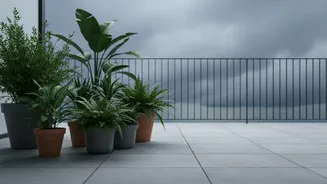


The Hidden Weight of Water
The most immediate danger during a downpour is the dramatic increase in the weight of your potted plants. Dry soil is relatively light, but it can become incredibly heavy once saturated with water. A single cubic foot of soil can jump from around 40 kilograms
to over 55 kilograms when waterlogged. This added weight puts immense strain on the pots themselves, as well as the shelves, brackets, and railings supporting them. A pot that was perfectly stable in dry weather could become a critical risk when filled with rainwater, especially if drainage is poor. This is why checking for potential issues before the heavy rains begin is not just a good idea—it’s an essential safety measure.
Inspect Your Pots and Drainage
Start with the containers themselves. Terracotta and ceramic pots can develop hairline cracks over time, which may fail under the stress of heavy, wet soil. Gently tap the sides and listen for a hollow or dull sound that might indicate a hidden fracture. For all pots, ensure the drainage holes are clear of debris. If water cannot escape, the soil becomes a dense, heavy sludge that can suffocate plant roots and, more alarmingly, exceed the load capacity of its support. Consider elevating pots slightly using pot feet or bricks to ensure water can drain freely and isn't blocked by the balcony floor itself. Grouping smaller pots together on the floor can also increase their stability against wind.
Test Your Railings and Supports
Next, turn your attention to the structures holding everything up. Carefully inspect all metal railings, brackets, and fasteners for any signs of rust or corrosion. Flaking paint or reddish-brown spots are early warnings that the metal's integrity may be compromised. Gently but firmly push and shake your railings and any wall-mounted shelves. A secure railing should not wobble, sway, or shift under pressure. Pay close attention to the points where supports are anchored to the wall or floor, as this is where weakness often begins. If you notice any movement, loose screws, or cracks in the surrounding masonry, it's crucial to get them repaired.
Secure Hanging and Loose Items
Hanging baskets, wind chimes, and other decorative items can become dangerous projectiles in high winds. For hanging plants, ensure the hooks are strong, securely fastened, and consider using a secondary tie-down for extra security. Strong gusts can create a sail effect with dense foliage, putting unexpected strain on the hook and chain. It's wise to move lighter, more fragile items indoors during periods of heavy wind and rain. Even empty pots or gardening tools stored on the balcony should be secured or brought inside, as they can be easily lifted by a strong gust of wind and cause damage or injury.
Check Balcony Drainage Systems
Finally, look at the balcony's overall drainage. Ensure that any built-in drainage outlets are clear of leaves, soil, and other debris that may have accumulated. Blocked drains can lead to pooling water on the balcony floor, which not only creates a slippery hazard but also adds significant, widespread weight to the entire structure. Standing water can also seep into cracks, accelerating damage to waterproofing membranes and the structure beneath. A properly draining balcony floor helps manage the deluge and prevents water from becoming a destructive force.