


The Science Behind the Spectacle
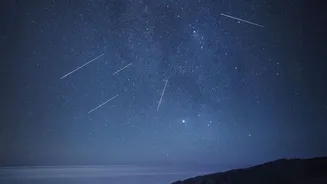
Meteor showers, or 'shooting stars', are not stars at all. They are the result of Earth passing through a trail of cosmic dust and debris left behind by a comet. As these tiny particles, some no bigger than a grain of sand, enter our atmosphere at high
speeds, they burn up and create brilliant streaks of light. The Perseids, which peak each August, are caused by debris from Comet Swift-Tuttle. This massive comet takes 133 years to orbit the sun and is the largest known object to repeatedly pass by Earth. The upcoming Orionids in October are born from an even more famous parent: Halley's Comet. This legendary comet, which visits the inner solar system every 76 years, leaves behind a dusty trail that Earth crosses twice a year, creating the Orionids in October and the Eta Aquarids in May.
Mark Your Calendar for the Orionids
While the 2026 Perseids offered a stunning show around August 12-13 with a new moon providing dark skies, the next major event is the Orionid meteor shower. The Orionids will be active from early October to early November, with the peak activity expected on the night of October 21-22, 2026. During the peak, you can expect to see around 15 to 25 meteors per hour from a truly dark location. Orionid meteors are known for their speed, travelling at about 66 kilometres per second, and often leave glowing trails that can linger for a few moments. Although the moon will be a waxing gibbous during the 2026 peak, it sets in the early morning hours, leaving a window of dark sky just before dawn, which is the best time to watch.
Escape the City's Glow
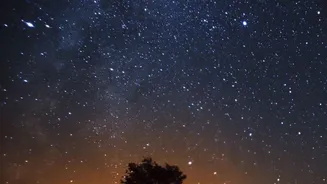
The single most important factor for a successful meteor shower viewing is to get away from city lights. Light pollution from urban areas creates a bright haze that washes out all but the brightest meteors. For residents of non-metro cities, finding a dark spot is much easier. Look for a location with a wide, unobstructed view of the sky, far from streetlights and building lights. This could be a local park on the outskirts of town, a nearby hill, or simply a rural area a short drive away. The goal is to find a spot where your eyes can fully adapt to the darkness, a process that takes about 20-30 minutes. The darker the site, the more shooting stars you will be able to see.
The Right Gear Is About Comfort
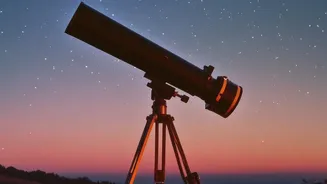
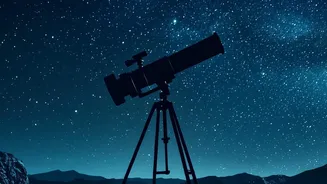
You do not need a telescope or binoculars to watch a meteor shower; in fact, they are counterproductive as they limit your field of view. The best tool is your own eyes. The most essential gear is for your comfort. Since you'll be outside for a while, often late at night, bring a comfortable reclining chair or a thick blanket to lie on. Dress in warm layers, as even pleasant evenings can turn chilly in the pre-dawn hours. A flask of a warm beverage and some snacks can make the waiting game much more enjoyable. Patience is key; there can be lulls in activity, followed by a sudden burst of meteors.
Where to Look and How to Watch
Once you've found your dark spot and settled in, lie back and look up, taking in as much of the sky as possible. While meteor showers are named for the constellation they appear to radiate from (Orion for the Orionids, Perseus for the Perseids), you don't need to stare at that specific point. In fact, looking about 45 degrees away from the radiant point can often reveal meteors with longer, more dramatic trails. The most important thing is to be patient and let your eyes adjust. Avoid looking at your phone, as the bright screen will ruin your night vision. Simply relax and enjoy the cosmic fireworks display above.
India’s Premier Dark Sky Havens
For those willing to travel for an unforgettable experience, India has several world-class stargazing locations. Hanle in Ladakh is India’s first official Dark Sky Reserve, offering some of the clearest skies in Asia at an altitude of 4,500 metres. Spiti Valley in Himachal Pradesh is another high-altitude desert with minimal light pollution, with villages like Kaza and Langza being prime spots. For more accessible options, consider the Rann of Kutch in Gujarat, especially during the winter months, which provides a vast, flat horizon. Hill stations in the Western Ghats like Coorg in Karnataka or spots in the Nilgiri Hills also offer excellent skies away from city centres.