




Look for the FSSAI Licence Number
The first and most crucial check is for the FSSAI logo and the 14-digit licence or registration number. This is a mandatory requirement for all legally sold packaged food in India and confirms that the manufacturer is registered with the food safety authority.
A missing FSSAI number is a major red flag, suggesting the product has not been subject to regulatory oversight. You can even verify the number on the FSSAI website or app to trace the manufacturer, which offers a layer of accountability beyond a fancy gift box.
Always Check Manufacturing and Expiry Dates
This seems obvious, but it’s easy to miss in the festive rush. Every packaged food must declare a 'Date of Manufacture' and an 'Expiry/Use by' date. It's important to understand the difference: 'Best Before' indicates the period during which the sweet retains its full flavour and quality, but it might still be safe to eat after. 'Expiry' or 'Use by' is a hard deadline; the food is considered unsafe for consumption after this date. For milk-based sweets like barfi or peda, which have a short shelf life, checking this is especially critical to avoid foodborne illnesses.
Scan the Ingredient List Carefully
Ingredients are listed in descending order by weight, so the first three to four items make up the bulk of the product. If the list starts with 'sugar', 'maida' (refined flour), or 'palm oil', you know it’s not a high-quality treat. During festival season, adulteration is a common concern. Be wary of sweets where 'khoya' or 'mawa' is a key ingredient, as it is often bulked up with starch or flour. Similarly, 'pure ghee' might be replaced with 'vanaspati' (hydrogenated vegetable oil), which contains unhealthy trans fats. A shorter, more recognizable ingredient list is generally a better sign.
Understand the Nutrition Facts Panel
Beyond the ingredients, the nutrition panel gives you the hard numbers. To make a fair comparison between products, always look at the values 'per 100g' rather than 'per serving', as serving sizes can be misleadingly small. Key things to watch for are 'Added Sugars', 'Saturated Fat', and 'Sodium'. While some sugar is natural in milk or fruit-based sweets, high levels of added sugar are a concern. Likewise, high saturated fat, often from palm oil or vanaspati, and any mention of 'partially hydrogenated oils' (a source of trans fat) should be a warning sign for heart health.
Check for Allergens and Additives
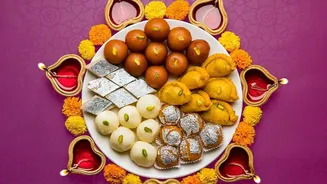
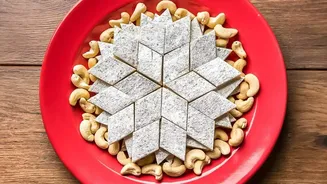
FSSAI rules mandate a clear declaration of common allergens. For Diwali sweets, this is particularly important as many contain milk, nuts, and wheat. If you are buying gifts, being mindful of this information is crucial. Another thing to watch for is artificial colours. Unnaturally bright yellow laddoos or vibrant green barfis may contain non-permitted industrial dyes, which can be harmful. The silver foil ('vark') used on sweets like Kaju Katli should also be pure; fake aluminium foil will often look dull or peel off instead of disintegrating when rubbed.
Decode the Symbols on the Pack
Indian food packaging has several mandatory symbols. The most recognized are the vegetarian and non-vegetarian marks. A green dot inside a green square indicates a vegetarian product. A brown triangle inside a brown square means it is non-vegetarian; keep in mind that products containing egg are classified as non-vegetarian. Additionally, packaging should be food-grade. Avoid products in decorative boxes that use metallic paints or glitter that can come into direct contact with the food, as these can leach harmful chemicals.