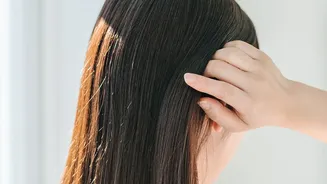






We’ve all done it: a quick dash from the house to the car with damp hair. While it might seem harmless, that blast of cold air on wet strands is doing more damage than you think, setting you up for a season of breakage and uncontrollable frizz.
The Science of a Single Hair Strand
To understand
the damage, you first need to know what your hair is made of. Each strand has an outer layer called the cuticle, which is formed by overlapping scales, much like tiles on a roof. Its job is to protect the inner cortex. When your hair is healthy, these cuticles lie flat, creating a smooth, shiny surface. But when hair is wet, it's in a uniquely vulnerable state. Water causes the hair shaft to swell, which lifts these protective cuticle scales, leaving the inner structure exposed.
How Freezing Water Causes Breakage
This is where the real damage begins. When you step into freezing temperatures with wet hair, the water absorbed into each strand can freeze. As water turns to ice, it expands. This expansion puts immense physical stress on the already-swollen and fragile hair shaft. The ice crystals push the cuticle scales further open and can even cause micro-fractures within the hair's cortex. This makes the hair incredibly brittle and stiff. The simple act of your hair rubbing against a coat collar, or even just moving in the wind, can cause these rigid, weakened strands to snap off entirely. This isn't just a matter of a few split ends; it’s severe mechanical breakage that can leave hair looking uneven and thin.
The Double Threat: Dry Air and Frizz
The problem doesn't stop with breakage. Winter air, both outdoors and indoors due to heating, is notoriously dry. This dry air aggressively pulls moisture from anything it can, including your hair. When your hair's cuticle is lifted and damaged from the freeze-thaw cycle, it becomes much more porous. This means it can't hold onto its own moisture effectively. In a desperate attempt to rehydrate, the porous strand tries to grab moisture from the surrounding air, causing it to swell unevenly. This process, combined with the rough, raised cuticles, is the perfect recipe for severe frizz and static.
The Golden Rule: Dry Before You Go
The most important preventative step is also the simplest: ensure your hair is completely dry before you step outside in the cold. While air drying is often recommended in warmer months, blow drying is frequently the healthier choice in winter to avoid prolonged exposure of wet hair to cold air. If you do blow dry, always use a heat protectant to shield your strands from thermal damage. Apply it to damp hair and use a medium heat setting, keeping the dryer moving to distribute heat evenly. Finishing with a cool shot can help seal the cuticle, locking in moisture and adding shine.
Your Winter Hair Protection Plan
Beyond just drying your hair, a few adjustments to your routine can make a world of difference. First, boost your moisture levels. A weekly deep conditioning treatment or hair mask will replenish hydration lost to dry air. Look for products with hydrating ingredients. Next, seal it in. Applying a leave in conditioner or a few drops of hair oil can create a protective barrier on the hair shaft, preventing moisture from escaping and reducing friction. Finally, protect your hair from physical damage. Wool and other coarse winter fabrics can snag and roughen the hair cuticle. Opt for hats lined with silk or satin to minimize friction and static, and consider wearing your hair in loose buns or braids to limit its exposure to the harsh elements.