








What is 'Climate-Smart' Thinking?
For decades, ‘environmentalism’ was seen as separate from the ‘real world’ of business and progress. Climate-smart thinking flips that script entirely. It’s not about just planting trees or reducing plastic; it’s a strategic framework for seeing the world through
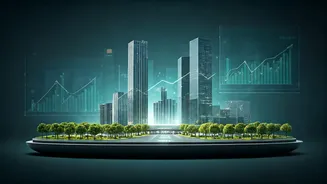
the lens of climate reality. It means treating climate change not as an external problem to be solved later, but as a core operating principle for every decision. A climate-smart farmer uses data to plant drought-resistant crops. A climate-smart CEO invests in a resilient supply chain that can withstand extreme weather. A climate-smart urban planner designs cities with green spaces to combat the ‘heat island’ effect. It is a mindset rooted in efficiency, resilience, innovation, and long-term value creation in a world fundamentally altered by a changing climate.
The New Economic Battleground
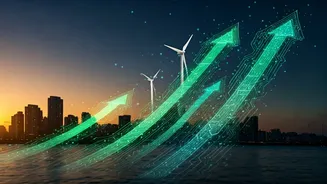
The transition to a low-carbon economy isn't a sacrifice; it's the greatest commercial opportunity of our time. In India, this is already playing out. The boom in renewable energy is not just an environmental policy, but an economic one, creating jobs and reducing dependence on volatile imported fuels. The electric vehicle (EV) revolution, led by homegrown companies like Ather Energy, Ola Electric, and Tata Motors, is redesigning mobility and building a new manufacturing ecosystem. Beyond the obvious sectors, the principle extends everywhere. Companies pioneering circular economy models—where waste is designed out of the system—are finding new revenue streams. Think of startups turning agricultural waste into biofuel or textile scraps into new fabric. These aren't niche ‘green’ businesses; they are simply smart businesses operating with a full awareness of 21st-century risks and opportunities.
From Boardrooms to Policy Rooms
This shift is being driven from both the top-down and bottom-up. Globally, investors are increasingly screening companies based on their Environmental, Social, and Governance (ESG) performance. A company that ignores its carbon footprint or water usage is now seen as carrying unmanaged risk. In response, Indian boardrooms are waking up. Major conglomerates are appointing Chief Sustainability Officers and integrating climate risk into their financial reporting. At the same time, the government is creating the policy architecture to accelerate this change. India's ambitious ‘Panchamrit’ commitments made at COP26—including a target for 500 GW of non-fossil energy capacity by 2030—send a powerful signal to the market: the future is electric, efficient, and sustainable. This policy certainty unlocks private investment and gives innovators the confidence to build for the long term.
The Skills That Will Define Careers
For individuals, this new reality demands a new set of skills. The jobs of tomorrow will belong to those who can think in systems, analyse climate data, and design sustainable solutions. We are seeing a surge in demand for renewable energy engineers, sustainability consultants, supply chain experts who understand climate risk, and data scientists who can model environmental impacts. But it’s not just about specialised roles. A marketing professional who understands how to communicate sustainability effectively will be more valuable. An accountant who can conduct a carbon audit will have an edge. A lawyer specialising in environmental regulation will be in high demand. Whatever your field, layering climate literacy on top of your existing expertise is no longer a ‘nice-to-have’—it is becoming a prerequisite for career relevance and advancement.