




Choosing a new outdoor exercise can be as exciting as it is daunting. For beginners seeking an accessible way to boost heart health, hiking and stand-up paddleboarding (SUP) are two fantastic, yet very different, options. Which is right for you?
The Cardiovascular Comparison
Both hiking
and paddleboarding offer excellent cardiovascular benefits, but they achieve them differently. Hiking is a classic aerobic exercise that elevates your heart rate, especially on trails with varied inclines. It improves circulation and endurance, and the intensity is highly customizable—walking on a flat path is gentle, while climbing a steep hill is a major workout. On average, an hour of hiking can burn between 400 and 600 calories, depending on the trail's difficulty and the weight of your pack. Paddleboarding provides a steady-state cardio workout that is surprisingly effective. While a leisurely paddle might feel relaxed, your body is constantly working. The effort of pulling the paddle through water combined with the continuous engagement of your core to maintain balance keeps your heart rate up. A casual hour of SUP can burn around 300 to 430 calories, similar to a brisk walk, while more intense paddling can burn upwards of 600 calories.
Muscle Engagement: Full Body vs. Lower Body Focus
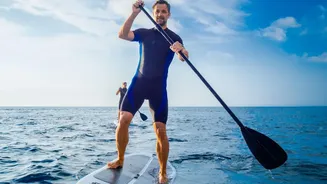
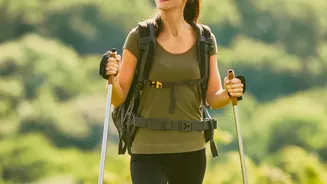
Here’s where the two activities really diverge. Hiking is predominantly a lower-body workout. It strengthens your glutes, quadriceps, hamstrings, and calves, with steeper inclines providing a more intense workout for these muscle groups. Your core muscles are also engaged to maintain posture and stability, especially when carrying a backpack or navigating uneven terrain. Using trekking poles can also add a light upper-body component. Stand-up paddleboarding is a true full-body workout. The most significant demand is on your core, which works constantly to keep you balanced on an unstable surface. Paddling engages your back, shoulders, and arms, while your legs and feet are always making small adjustments to maintain stability. This makes SUP a unique combination of strength, balance, and endurance.
Accessibility and The Learning Curve
For a true beginner, hiking is arguably the most accessible outdoor activity. If you can walk, you can hike. You can start on flat, well-marked trails in local parks and gradually progress to more challenging terrain. The basic skill is intuitive, and there's no special technique required to get started. Paddleboarding has a slightly steeper, though still gentle, learning curve. Most beginners start by kneeling on the board and can typically stand up and paddle comfortably within the first hour. The main initial challenge is balance, which can feel wobbly for the first 10-20 minutes. However, it is widely considered one of the easiest water sports to learn. Calm, flat water is essential for your first few outings.
The Cost of Getting Started
The financial barrier to entry for hiking is very low. You can start with a comfortable pair of trainers you already own, a backpack, and a water bottle. As you get more serious, you’ll want to invest in proper hiking boots ($50-$200), a good daypack ($30-$150), and appropriate layered clothing. Even with quality entry-level gear, you can be well equipped for under a few hundred dollars. Paddleboarding requires a more significant upfront investment if you want to own your equipment. A complete beginner package for an inflatable stand up paddleboard (iSUP), which includes the board, pump, and paddle, typically ranges from $300 to $700. While cheaper options exist, quality can be a concern. However, a great alternative for beginners is to rent equipment or take a lesson, which can cost between $35 and $75, allowing you to try the sport without a major financial commitment.