




Maharashtra: The Tradition of ‘Faral’
In Maharashtra, Diwali is synonymous with 'Faral', an assortment of sweet and savoury snacks prepared in homes and shared with loved ones. This platter is a labour of love, with preparations often starting days in advance. A typical Faral plate is a study
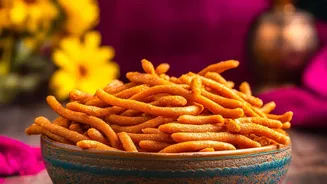
in balance. For every sweet item, there’s a savoury one to complement it. Popular sweets include the crescent-shaped Karanji, a fried pastry filled with coconut and jaggery, and the beloved Rava and Besan Ladoos. On the savoury side, the crunchy, spiral-shaped Chakli, made from a special roasted flour blend called 'bhajni', is non-negotiable. It's accompanied by crisp, diamond-shaped Shankarpali, which comes in both sweet (sakharpara) and savoury (namkeen para) versions, and a spicy, dry mixture called Poha Chivda. This tradition of sharing a diverse platter reinforces the spirit of community and celebration.
Gujarat: A Symphony of Sweet and Savoury
Gujarati farsan (snacks) are famous year-round, but Diwali brings out the festive best. The state's culinary identity, which beautifully balances sweet, salty, and spicy notes, shines through in its Diwali preparations. Ghughra are a quintessential Diwali sweet, similar to Maharashtra's Karanji but often filled with mawa (milk solids), semolina, and nuts. Another unique item is Mathiya, a crispy, papad-like snack made from moth bean flour. These are rolled thin, fried quickly, and sometimes dusted with a mild chilli powder, offering a delightful crunch. No Gujarati Diwali is complete without a variety of 'chevdo' or 'mixture', a savoury mix that can include ingredients like flattened rice, sev (crispy gram flour noodles), peanuts, and lentils. The 'lilo chevdo' (made with fresh, soft ingredients) is a seasonal speciality with a shorter shelf life, making it a prized treat.
South India: Rice Flour and Jaggery Delights
Across South India, rice flour is a foundational ingredient for many iconic Diwali snacks. The celebration here often marks Krishna's victory over Narakasura. One of the most beloved savoury items is Murukku, which means 'twisted' in Tamil. This crunchy, spiral snack is made from rice flour and urad dal flour. Thenkuzhal is a popular variety, known for its simpler, smoother texture without the spikes of a classic murukku. On the sweet front, Adhirasam is a traditional delicacy. It's a chewy, deep-fried pastry made from rice flour and jaggery, with a history stretching back centuries. Payasam, a creamy pudding, is another festive staple, often made with rice, milk, and jaggery or sugar and offered to deities as a symbol of prosperity. The use of coconut, ghee, and cardamom is prominent in many South Indian sweets like the famous Mysore Pak, a rich, melt-in-your-mouth fudge made from gram flour and ghee.
North India: Rich, Ghee-Laden Treats
In North India, where Diwali celebrates Lord Ram's return to Ayodhya, the snacks are often rich, hearty, and generously made with ghee, milk, and nuts. Gujiya is the undisputed star here. These crescent-shaped pastries are filled with khoya (reduced milk solids), nuts, and dried fruits, before being deep-fried. Ladoos, particularly Besan Ladoo made from roasted gram flour, are a staple in every household and for gifting. Another festive favourite is Mathri, a flaky, biscuit-like savoury cracker seasoned with spices like carom seeds (ajwain) and cumin. It pairs perfectly with pickles and tea during festive gatherings. Alongside these, you'll find syrupy sweets like Gulab Jamun and Jalebi, which are popular across the country but hold a special place on the North Indian Diwali table.
Bengal: The Sweetest Celebrations
While most of India celebrates Diwali, Bengal celebrates Kali Puja on the same day. The culinary focus, true to Bengali form, is firmly on sweets, or 'mishti'. Many Bengali sweets are made from chhena (freshly curdled cheese), which gives them a unique, delicate texture. Classics like Sandesh (chhena fudge) and Rasgulla (spongy cheese balls in syrup) are ever-present. For the festive season, you might find more elaborate creations. Lobongo Lotika is a delightful pastry filled with a mixture of khoya and coconut, sealed with a clove (lobongo), and then fried and dipped in syrup. Another treat is Chandrakala, named for its half-moon shape, which is a fried dumpling filled with sweetened khoya. While savoury snacks are less of a focus, some households do prepare Nimki, a simple, salted fried cracker, to balance the overwhelming sweetness of the festive spread.