


A Dazzling Planetary Dance
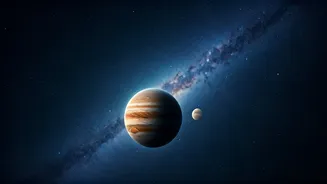
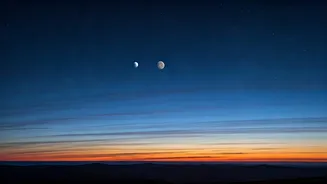
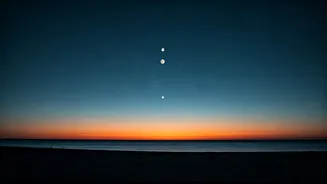
The reason for tonight's celestial alert is a stunning conjunction between Venus and Jupiter. In astronomy, a conjunction occurs when two celestial objects appear to be very close to each other in the sky from our perspective on Earth. In reality, they
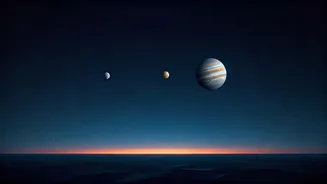
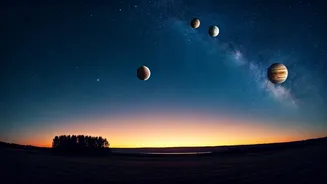
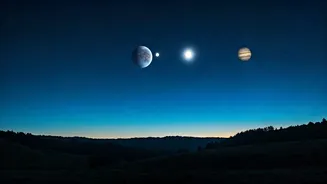
remain hundreds of millions of kilometres apart, but their alignment creates a beautiful and often breathtaking illusion. Venus, often called the “Evening Star,” is the brightest planet visible from Earth, while Jupiter is the second brightest. When these two powerhouses of brilliance appear to almost touch, the sight is unmissable. It’s not an astronomically rare event in the grand scheme of things, but it is always a spectacular one, transforming the twilight sky into a stage for a slow, majestic cosmic ballet.
Your Guide to Spotting the Spectacle
Seeing this event is remarkably simple. Here’s your step-by-step guide:
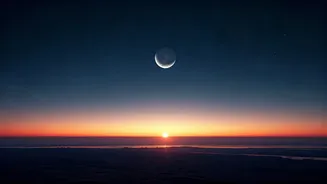
1. **Timing is Everything:** The best time to look is about 30 to 60 minutes after sunset. This is when the sky is dark enough for the planets to shine brightly, but before they dip below the western horizon themselves.
2. **Face the West:** As the headline suggests, the action is all in the west. This is the direction where the sun just set. Find a spot with an unobstructed view of the western horizon if possible, away from tall buildings or trees.
3. **Know What You're Looking For:** You won’t need a star chart. Look for the brightest point of light in that part of the sky—that’s Venus. It will look like an incredibly bright, unblinking star. Tonight, you will see another, slightly fainter (but still very bright) point of light extremely close to it. That's Jupiter. They will appear closer together than you might expect, almost like a celestial pair.
Why No Telescope Is Required
One of the best things about bright planetary conjunctions is their accessibility. Unlike faint nebulae or distant galaxies, this event is a naked-eye phenomenon. The sheer brilliance of Venus and Jupiter means they easily cut through the light pollution of most Indian cities and towns. You don’t need any special equipment to enjoy the view.
That said, if you have a pair of binoculars, now is the time to use them. While you won't see surface details on Venus, a standard pair of binoculars will transform Jupiter from a bright dot into a tiny, distinct disc. You might even be able to spot its four largest moons—Io, Europa, Ganymede, and Callisto—appearing as tiny pinpricks of light in a neat line on either side of the planet. This simple act of using binoculars can transform the viewing from a beautiful sight into a personal moment of discovery.
The View from India's Stargazers
Amateur astronomy clubs and space enthusiasts across India are buzzing with excitement. For these groups, events like this are a perfect opportunity to engage the public and share their passion for the cosmos. Many local clubs often set up telescopes in public parks or on rooftops, inviting passersby to take a closer look and learn about what they are seeing. It’s a moment of community science, where the wonder of the universe becomes a shared experience.
These clubs are urging everyone to look up because they know how powerful such a simple act can be. It's a reminder of the vast, beautiful universe we are a part of—a universe that is always there, waiting for us to notice. Their message is simple: you don't need to be a scientist to be a stargazer.
More Than Just Dots of Light
As you watch Venus and Jupiter hang together in the twilight, take a moment to consider what you're seeing. Venus, our nearest planetary neighbour, is a world shrouded in thick, toxic clouds that reflect sunlight brilliantly, making it so bright. It’s a hellish landscape of crushing pressure and extreme heat. Jupiter, on the other hand, is the giant of our solar system, a massive ball of gas more than 1,300 times the volume of Earth. It’s a stormy, dynamic world with a Great Red Spot a storm larger than our entire planet.
Tonight, from your balcony or a nearby field, you are seeing these two vastly different worlds align perfectly in your line of sight. It’s a fleeting perspective on the grand architecture of our solar system, a beautiful coincidence that connects us directly to the cosmos.