

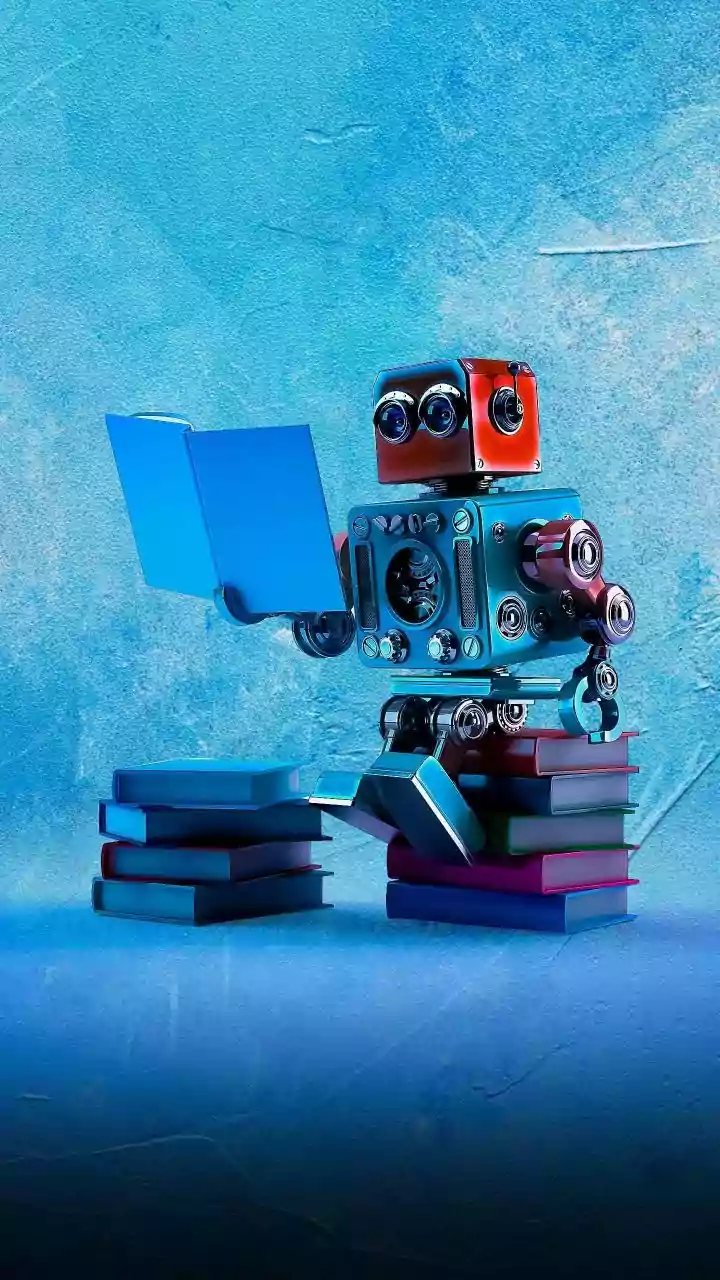





Meet the AI Tutor
Imagine this: It’s 2 a.m. in Mumbai, and an engineering student is cramming for a fluid dynamics quiz. The textbook is dense, and a key concept just isn’t clicking. Instead of highlighting passages in a daze, she opens an app and starts a conversation.
“Explain the Bernoulli principle to me like I’m ten,” she types. Instantly, a simple analogy appears. “Now give me five practice problems based on that.” They appear. “Check my answers.” They’re checked, with explanations for the mistakes. This isn’t science fiction; it’s the new reality for a rapidly growing number of students in India. Generative AI tools, from ChatGPT to specialized educational platforms, have become indispensable partners in their academic lives. They aren't just using them for last-minute help; they are integrating them into their daily study routines, treating them as infinitely patient, on-demand tutors for everything from low-stakes quizzes to complex exam preparation.
A Perfect Storm for AI Adoption
So, why is this trend exploding in India specifically? It's a perfect storm of social pressure, technology, and educational structure. First, consider the scale and competition. India has one of the world's largest student populations, with tens of millions vying for limited spots in top institutions and for high-paying jobs after graduation. The pressure to excel is immense and constant. Second, the country is a mobile-first nation. With some of the cheapest data plans on the planet and widespread smartphone penetration, nearly every student has a powerful computer in their pocket. This has fueled a massive EdTech (education technology) boom that was supercharged during the pandemic, making students and educators alike comfortable with digital learning tools. Finally, some traditional teaching methods, which can emphasize rote memorization and standardized testing, create an environment where AI's ability to summarize, generate questions, and explain concepts endlessly is incredibly effective. For a student in a lecture hall with 300 others, a personalized AI tutor is a game-changer.
Tutor vs. Cheat Sheet
The immediate question for any American educator or parent is obvious: Isn't this just cheating? The line is definitely blurry. While some students undoubtedly use AI to get answers during unsupervised online quizzes, many argue its primary use is far more constructive. For them, it’s a tool for learning, not just for bypassing it. An AI can re-explain a complex topic in a dozen different ways until it finally makes sense—a luxury a busy professor can't afford. It can generate unlimited practice quizzes, helping students master material through repetition. In this light, the AI isn’t a cheat sheet but a supercharged tutor, democratizing access to one-on-one academic support that was previously only available to the wealthy. Universities are struggling to keep up, with some trying to ban the tools and others looking for ways to integrate them, shifting from assessments that test memorization to those that test critical thinking and application—skills that, for now, remain uniquely human.
A Preview of the American Classroom?
What’s happening in India isn’t an isolated phenomenon; it’s a glimpse into the future of education everywhere, including the United States. While American students are certainly using ChatGPT, the sheer scale, competitive intensity, and mobile infrastructure in India have put the trend into hyperdrive. It serves as a large-scale social experiment. Can AI truly personalize learning for millions? What happens to the role of the teacher when every student has a know-it-all in their pocket? The Indian experience suggests that the knee-jerk reaction to ban AI is a losing battle. Instead, it forces a necessary conversation about what we want students to learn and how we measure that knowledge. The era of the simple, fact-based quiz may be coming to an end, pushed into obsolescence not by lazy students, but by a technology that has fundamentally changed the game of learning itself.