

The system managing 45,000 flights daily in the U.S. is undergoing a critical digital transformation. The Federal Aviation Administration (FAA) is replacing decades-old manual processes with new controller displays to boost safety and efficiency.
From Paper and Floppy Disks to Digital Displays
For decades,
America's air traffic control system has relied on surprisingly analog tools. Controllers have used paper flight strips to track an aircraft's progress and, in some cases, technology dependent on floppy disks to receive critical updates. These manual processes require controllers to juggle information from multiple disconnected sources, including separate updates for weather, equipment outages, and restricted airspace. This method increases cognitive load and creates the potential for delays and errors. In early November 2026, the FAA announced it was actively replacing this legacy technology with a modern, integrated system designed for the 21st century.
Introducing the Enterprise Information Display System
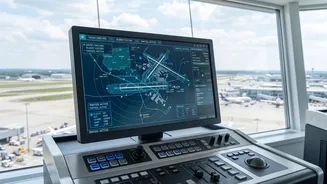
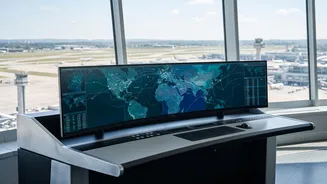
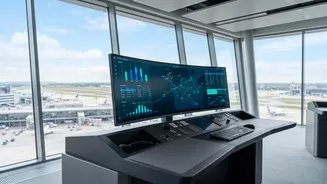
The centerpiece of this modernization is the Enterprise Information Display System, or E-IDS. This new platform consolidates all critical operational information into a single, unified digital display for controllers. Instead of manually checking various systems, controllers will have one screen that provides real-time alerts on weather, flight schedules, pilot reports, and equipment status. According to FAA Administrator Bryan Bedford, this shift allows controllers to make timely decisions and instantly share vital information across the entire National Airspace System. The E-IDS is a key part of a broader FAA initiative called the 'Brand New Air Traffic Control System' (BNATCS), a multi-billion dollar effort to overhaul the nation's aging aviation infrastructure.
What This Means for Controllers and Safety
By automating manual tasks and integrating data, E-IDS aims to significantly reduce controller workload and the risk of human error. The system acts as a digital bulletin board, ensuring that every controller has the same real-time operational picture. This replaces the need for handwritten notes and mental reminders about runway closures or other hazards. Another parallel upgrade is the move from paper to Electronic Flight Strips (EFS) under the Terminal Flight Data Manager (TFDM) program. This technology provides a shared, real-time view of aircraft activity on the ground for controllers, airline managers, and airport operations, directly enhancing coordination and safety.
The Impact on Passengers and Flights
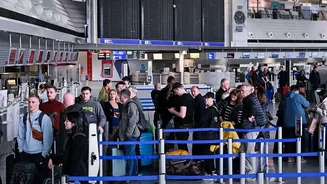
For the flying public, these behindthescenes upgrades are expected to translate into a more reliable and efficient travel experience. By giving controllers better predictive tools and a clearer view of ground operations, the TFDM and EIDS systems can help reduce delays and optimize the flow of departures and arrivals. The modernization efforts are also projected to decrease the frequency of disruptions caused by aging equipment failures, which have previously led to ground stops and widespread delays. Ultimately, the goal is to increase the predictability and resilience of the national airspace, making air travel smoother and safer for millions of passengers.
The Rollout Plan
The FAA is implementing these changes in phases. The initial rollout for the new EIDS displays began in November 2026 at five sites: Atlantic City International Airport, Nashville International Airport, Greater Rochester International Airport, and FAA data hubs in Atlanta and Salt Lake City. The agency plans to expand EIDS to 435 facilities by the end of 2028. The deployment of electronic flight strips through the TFDM program is also well underway, with major airports like HartsfieldJackson Atlanta and Reagan National in Washington, D.C. already having made the switch. While these ambitious projects have faced delays and cost adjustments in the past, the current push represents a significant acceleration in the longterm goal of modernizing Americas critical aviation infrastructure.