

Day 1: An Auspicious Welcome
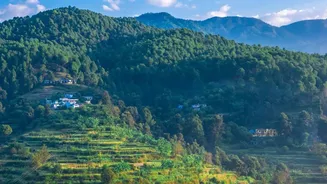
The journey into Uttarakhand’s Kumaon region begins not just with winding roads and pine-scented air, but with a simple, striking detail at the entrance of homes. Against a deep, earthy red background, intricate white patterns greet you from the floor.
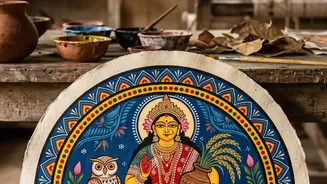
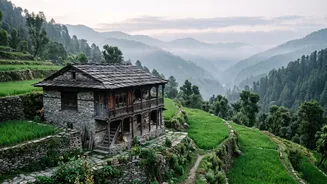
This is your first encounter with Aipan, the region's traditional folk art. Originating centuries ago, likely during the Chand Dynasty, Aipan is more than just decoration; it’s a visual welcome and a spiritual shield. The word itself is derived from 'arpan', meaning 'to inscribe' or 'offering'. Traditionally drawn by women, these patterns on floors, walls, and puja rooms are considered auspicious, designed to invite positive energy and ward off evil. As you settle into a homestay in a town like Almora, the art’s presence feels both constant and profound. It’s on the wooden 'chauki' (a small pedestal for deities), at the base of the Tulsi plant, and framing the main door, a silent testament to a living, breathing tradition.
Day 2: The Language of Red and White
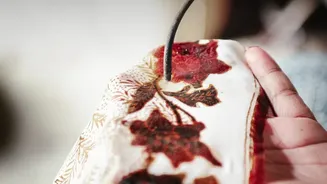
A deeper appreciation for Aipan comes from understanding its creation. The process is elemental and deeply symbolic. The canvas is prepared with 'geru', a red ochre clay mixed with water, which represents the earth and fertility. Upon this vibrant red base, the artist draws using 'biswar', a creamy white paste made from rice soaked overnight and ground by hand. The white signifies purity and prosperity. Traditionally, no brushes are used. Women use their fingertips—often the ring, middle, and forefinger—to create the fluid, precise lines. Every design begins and ends with a dot, or 'bindu', which symbolizes the center of the universe and the origin of life. From this single point, a world of motifs unfolds: floral patterns, conch shells, geometric shapes, and the footprints of gods and goddesses. It's a visual language passed down from mother to daughter, where each symbol has a specific purpose and meaning.
Day 3: A Ritual in Every Line
Aipan is inextricably linked to the rituals of Kumaoni life. The patterns are not chosen at random; each design is specific to an occasion, from birth and marriage ceremonies to festivals like Diwali and Harela. Witnessing a ceremony, you begin to see how this art transforms a simple space into a sacred one. For a wedding, a specific 'chowki' is drawn. During Diwali, 'Lakshmi Pad'—stylized footprints of the goddess—are painted leading from the doorway into the house, a direct invitation for wealth and fortune. Another common design is the 'Vasudhara', a series of vertical lines dripped down the sides of a doorway or altar, symbolizing a continuous flow of prosperity. A design drawn for a happy occasion will always include dots, which signify life and completeness; an Aipan without dots is reserved for rituals associated with death. This strict adherence to ritual makes Aipan a functional art—a document of faith drawn and redrawn with the turning of seasons and the milestones of life.
Day 4: A Tradition Evolves
While its soul remains in ritual, Aipan is finding new avenues for expression. In an age of migration and modernization, the art form faced the risk of fading, with printed stickers sometimes replacing hand-drawn patterns. However, a revival is underway, driven by local artisans and entrepreneurs. The intricate red-and-white designs now adorn canvas paintings, wall hangings, nameplates, clothing, and various souvenirs, providing a vital source of livelihood, especially for women in the region. In 2021, Uttarakhand's Aipan was granted a Geographical Indication (GI) tag, a crucial step that protects its authenticity and heritage. This recognition ensures that the art form's commercial growth remains rooted in its cultural origins. As you leave Kumaon, you take with you not just a beautiful souvenir, but an understanding that Aipan is a story of resilience—a sacred tradition that continues to draw its lines into the future.