




The Invisible Threat to Lunar Science
Wherever humans go, microbes follow. They are on our skin, in our bodies, and all over our environment. For decades, space agencies have known that spacecraft, despite rigorous cleaning, are never truly sterile. This issue, known as forward contamination,
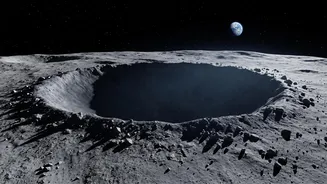
poses a significant threat to one of the primary goals of lunar exploration: studying the Moon in its pristine, untouched state. Scientists are particularly interested in permanently shadowed regions near the lunar poles, where water ice has been trapped for billions of years. These frigid, dark craters could hold clues about the origins of our solar system. If microbes from Earth were introduced to these areas, they could corrupt the very science we hope to conduct, making it impossible to know if any organic molecules discovered are truly lunar or just contamination from home.
Mapping the Microbial Stowaways
To solve this problem, NASA scientists are not mapping the Moon, but rather the spacecraft themselves. In facilities like the Jet Propulsion Laboratory, researchers are creating detailed "microbe maps" of the cleanrooms where spacecraft are assembled. Using advanced genetic sequencing techniques, they identify exactly what kinds of bacteria and fungi live in these environments and where they tend to cluster. This project has revealed that different microbes prefer different surfaces; some thrive on metallic hardware, while others are more common on floors or electronic components. The result is a comprehensive atlas of the microbial landscape of a spacecraft before it even launches. By knowing the location of these microbial "hotspots," engineers and mission planners can develop more targeted and effective sterilization strategies.
A New Guide for Clean Exploration
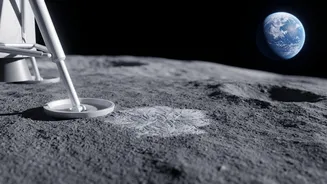
These maps serve as a critical tool for planetary protection, a principle guiding all interplanetary missions to avoid contaminating other worlds. For upcoming Artemis missions, the maps will inform several key decisions. For example, highly sensitive scientific instruments can be strategically placed on a lander in areas shown to have the lowest microbial load. This minimizes the risk of them carrying hitchhikers to the lunar surface. The data also helps refine cleaning procedures, allowing teams to focus their efforts on known hotspots rather than applying uniform cleaning everywhere. This proactive approach is a significant step up from previous methods and is essential for crewed missions, where complete sterilization is impossible because humans themselves are a major source of microbes.
What Kind of Life Survives?
Recent studies have shown that some Earth microbes are surprisingly resilient. Organisms like the fungus Aspergillus niger, commonly found in damp environments and even on the International Space Station, have demonstrated a high resistance to the harsh ultraviolet radiation of space. NASA models predict that in the cold, shadowed craters near the Moon's south pole, some of these hardy microbes could potentially survive for days or longer. It’s important to note that survival does not mean thriving; the Moon lacks the liquid water and atmosphere necessary for these microbes to grow or reproduce. However, their simple persistence is enough to risk confusing future scientific analysis. By understanding which organisms are toughest and where they are likely to be on a lander, NASA can better protect the scientifically valuable, and vulnerable, regions of the Moon.