



The Calorie Burn Breakdown
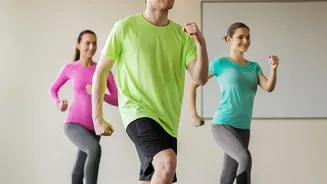
When it comes to burning calories, both aerobics and trampolining are effective, but they operate differently. A typical high-energy aerobics class, with its sustained, rhythmic movements, can be a calorie-torching powerhouse. Trampolining, also known
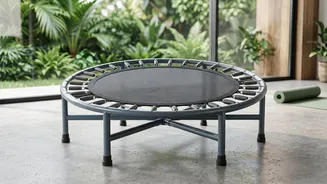
as rebounding, often involves shorter, high-intensity bursts of activity. While aerobics may burn more calories over a longer, continuous session, studies have shown that trampolining can be remarkably efficient. For example, an American Council on Exercise (ACE) study found that a 19-minute trampoline workout could burn an average of 12.4 calories per minute for men and 9.4 for women, which is comparable to running at a steady pace. The verdict here is that both are effective, but your choice might depend on whether you prefer sustained effort or intense intervals.
A Question of Joint Impact
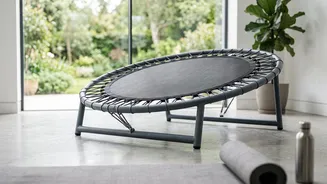
This is where trampolining truly stands out. High-impact aerobics can put significant stress on your ankles, knees, and hips. In contrast, the elastic surface of a mini-trampoline absorbs the vast majority of the impact—some studies suggest up to 80% less force on the joints compared to running on a hard surface. This makes rebounding an excellent option for individuals with joint sensitivities, those recovering from injuries, or anyone looking for a sustainable, long-term cardio solution that is kinder to their body. Aerobics can be modified to be lower-impact, but the inherent nature of trampolining provides a built-in protective cushion.
Cardiovascular and Muscle Engagement
Both activities will get your heart pumping, strengthening your cardiovascular system over time. Aerobics excels at structured, continuous movement that improves heart health and circulation. Trampolining does this too, but with an added twist. The unstable surface of the rebounder forces your body to constantly make micro-adjustments to maintain balance. This engages not only your major leg muscles but also your deep core and stabilizer muscles in a way that flat-surface exercises often don't. In fact, some research suggests trampolining activates over 400 muscles in a single session. A famous NASA study even found rebounding to be 68% more efficient than jogging for cardiovascular conditioning and oxygen uptake, making it a surprisingly potent full-body workout.
Accessibility, Cost, and Convenience
Aerobics holds a slight edge in accessibility. Classes are widely available at gyms and community centres, often with professional guidance, and many routines can be done at home with minimal equipment. Running, a form of aerobics, is even more accessible, requiring only a pair of shoes. Trampolining requires a specific piece of equipment—a mini-trampoline or rebounder. While this is a one-time investment, it does require space in your home. However, the convenience of having a rebounder ready for a quick 10 or 15-minute session at home is a significant advantage for those with busy schedules. Some studies suggest a 10-minute bounce can offer similar cardiovascular benefits to a 30-minute run.
The Fun Factor: Which Will You Stick With?
The best workout is the one you actually do. For many, the rhythmic, structured nature of an aerobics class is motivating and enjoyable. The music, choreography, and group energy can make the time fly by. For others, the playful, liberating feeling of bouncing on a trampoline is what keeps them coming back. The act of jumping can feel less like a chore and more like fun, which can be a powerful motivator. Participants in one study rated their effort on the trampoline as feeling lower than the actual exertion level, suggesting the fun factor can make a tough workout feel easier. Ultimately, enjoyment is personal, and finding the activity that brings you joy is key to consistency.