

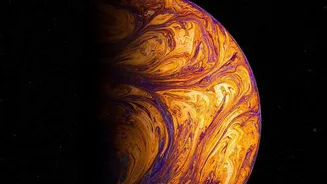
The Challenge of a Hostile World
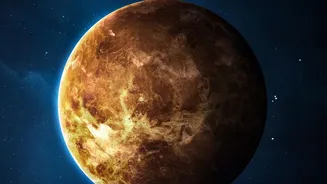
Studying Venus is incredibly difficult. Its atmosphere is over 90 times denser than Earth's, creating a crushing pressure that would destroy most spacecraft in an instant. The surface temperature hovers around a scorching 460 degrees Celsius, hot enough
to melt lead. Capping it all off are the dense, opaque clouds of sulphuric acid that perpetually hide the planet's surface from view. These hostile conditions are why, despite being our closest planetary neighbour, Venus remains one of the most enigmatic worlds in our solar system. Understanding how and why Earth's supposed twin ended up with such a runaway greenhouse effect is a key scientific driver for missions like Shukrayaan.
The Key: Peering Through with Radar
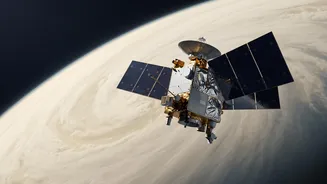
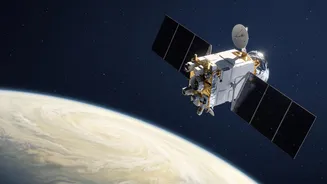
The secret to Shukrayaan's ability to study the Venusian surface lies in a technology that doesn't rely on visible light: radar. The orbiter's flagship instrument is a high-resolution Synthetic Aperture Radar (SAR). Unlike a camera, a SAR works by sending out its own radio wave signals towards the planet's surface. These signals penetrate through the dense clouds, bounce off the ground, and return to the orbiter. By precisely measuring the timing and intensity of these returning echoes, scientists can construct a detailed, three-dimensional map of the surface terrain, regardless of the cloud cover or whether it's day or night. Shukrayaan's SAR is expected to have a much higher resolution than that of NASA's Magellan mission from the 1990s, promising an unprecedented look at Venus's geology.
Going Deeper: A First-Ever Subsurface Look
Shukrayaan is not just designed to map the surface; it will be the first mission ever to look beneath it. The orbiter will carry a ground-penetrating radar, another instrument that uses radio waves but at a different frequency designed to penetrate solid ground. This will allow scientists to study the shallow subsurface of Venus, investigating rock layers, geological structures, and potentially even buried lava tubes or magma chambers. This study of stratigraphy—the layering of rocks—is crucial for understanding the planet's volcanic history and how its surface has evolved over millions of years. No previous mission has ever attempted this kind of subsurface investigation on Venus.
A Full Atmospheric Portrait
While the radars focus on the ground below, a whole suite of other instruments will be aimed at the atmosphere itself. The orbiter is equipped with sensors and spectrometers designed to analyse the chemical composition and dynamics of the atmosphere at various altitudes. These instruments will study the structure of the clouds, monitor for lightning, and measure wind speeds within the planet's mysterious super-rotating atmosphere. International collaborations are a key part of this effort. An instrument co-developed with Russia and France, known as VIRAL, will specifically analyse atmospheric gases. Meanwhile, a payload from Sweden will study how the solar wind interacts with the upper atmosphere, which could help explain how Venus lost its water and became so inhospitable.
An Ambitious Timeline for Indian Science
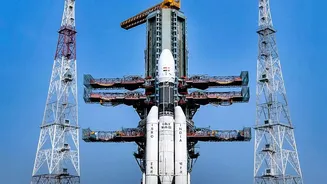
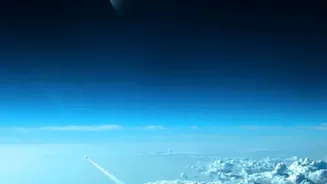
Formally approved by the government in 2024, the Shukrayaan-1 mission represents a major step forward for India's planetary exploration programme. The launch is currently scheduled for March 2028 aboard the powerful LVM-3 rocket, the same vehicle that successfully launched Chandrayaan-3. After a journey of several months, the spacecraft will enter a large elliptical orbit around Venus. ISRO will then perform a series of complex aerobraking manoeuvres—using the friction of the planet’s upper atmosphere to slow down and gradually lower its orbit—to settle into the final position for its multi-year scientific study.