





The Problem with the Old Model
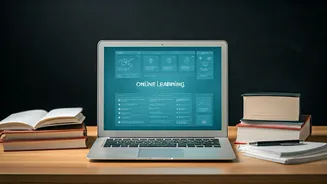
Remember the promise of Massive Open Online Courses (MOOCs)? World-class education available to anyone with an internet connection. [4] The reality, however, has been underwhelming. Studies have shown that completion rates for these self-paced courses
are often shockingly low, with some reports finding a median of just 12.6%, and many students dropping off after the first week. [3, 9] The reason isn't necessarily poor content. The issue is the structure: a lonely, passive experience. Watching pre-recorded videos in isolation lacks the accountability and interaction that helps learning stick. [6, 23] Without a shared schedule or peer pressure, it's all too easy for motivation to fade and for a purchased course to become expensive 'shelf-ware'. [4, 9]
Enter: Cohort-Based Courses
The most significant evolution beyond the traditional online course is the rise of cohort-based courses (CBCs). [24] Instead of a free-for-all, a CBC gathers a group of learners (a cohort) to go through a structured curriculum together over a fixed period, such as a few weeks. [23] This model reintroduces two critical elements of traditional education: a shared timeline and live interaction. [2] With scheduled live sessions, group projects, and peer reviews, learning becomes an active, collaborative process. The results are staggering: while MOOCs struggle with single-digit completion, cohort-based programs from platforms like Maven and altMBA report completion rates of 85% to 96%. [3, 13] This structure fosters accountability; when your peers are expecting you, you're more likely to show up and do the work. [9]
The Power of Learning in Communities
Beyond scheduled courses, learning is now being integrated directly into paid communities. Using platforms like Circle, Mighty Networks, and Skool, creators are building dedicated spaces where education is an ongoing feature, not a one-time product. [1, 5] In these models, a member might get access to a resource library, weekly live Q&A sessions, discussion forums, and networking opportunities. [8] The learning path can be more organic, driven by the community's collective needs rather than a rigid, top-down syllabus. [4] This approach transforms learning from a transaction into a relationship. It provides faster feedback loops and builds connections that can outlast any single course. [6] For many, the community *is* the product, with the educational content serving as the central pillar.
Why This Shift is Accelerating
This movement isn't happening in a vacuum. It's a convergence of several key trends. Firstly, the creator economy has matured. [11] Creators with established audiences and credibility are looking for more sustainable and impactful ways to monetize their expertise beyond ads and sponsorships. [12] Secondly, learners are demanding better outcomes. After years of collecting unfinished courses, people are willing to pay a premium for experiences that deliver real transformation and connection. [24] Finally, technology has caught up. Platforms now make it easier than ever for creators to manage cohorts, host live sessions, and build branded community spaces without needing a full development team. [1, 7] This shift represents a move away from simply selling information (a commodity) and toward selling experiences, accountability, and results.