


Rajasthan's Open-Air Art Gallery
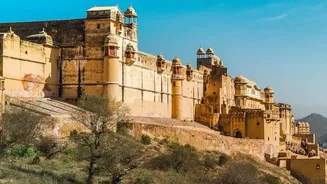
Tucked away in northeastern Rajasthan, the Shekhawati region is a world away from the state's typical tourist trails. It’s not a single city but a cluster of towns like Mandawa, Nawalgarh, and Fatehpur, all bound by a unique artistic heritage. This area
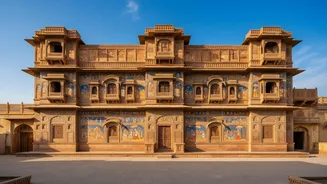
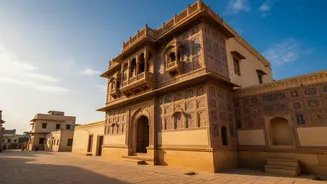
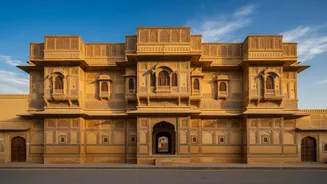
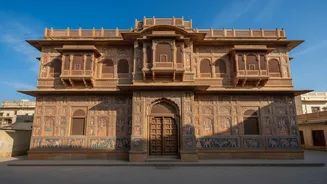
was once a critical crossroads on the caravan trade routes connecting India to Central Asia. During the 18th and 19th centuries, wealthy Marwari merchants, whose families often originated from this region, amassed fortunes in port cities like Calcutta and Bombay. To showcase their prosperity, they sent wealth back home, commissioning the construction of magnificent havelis, or traditional private mansions. But these were no ordinary homes; they were canvases for an explosion of creativity. The walls, both inside and out, were covered in intricate frescoes, earning Shekhawati the nickname 'the world's largest open-air art gallery'.
A Visual History on Plaster
The frescoes of Shekhawati are more than just decoration; they are a vibrant chronicle of a changing India. Early paintings drew heavily on mythology, with countless depictions of Lord Krishna, and tales from the Ramayana and Mahabharata. Rajput and Mughal artistic styles are also clearly visible in the floral patterns and grand courtly scenes. However, as the merchants’ trade exposed them to British culture and technology, the art evolved. Soon, walls began to feature fascinating new subjects: steam locomotives, early motorcars, gramophones, and even portraits of British royalty. These paintings were often based on the artists' imaginations, guided by descriptions from the haveli owners. This blend of the traditional and the modern, the divine and the industrial, makes wandering through these towns a treasure hunt through history.
From Fading Grandeur to Heritage Havens
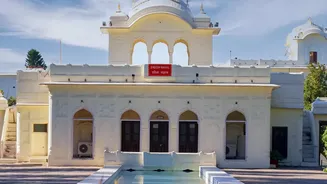
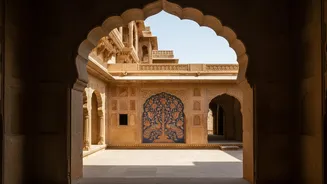
For decades, as merchant families moved away permanently, many of these architectural gems fell into disrepair, their brilliant colours fading under the harsh desert sun. However, a growing appreciation for this unique heritage has sparked a restoration movement. Several havelis have been meticulously brought back to life, not just as museums but as enchanting heritage hotels. Staying in one of these restored properties, such as Castle Mandawa or one of the many converted havelis in Nawalgarh, allows you to immerse yourself completely in the region's history. These hotels blend the historic—ornate archways, frescoed walls, and antique furniture—with modern comforts, offering an authentic and luxurious base for exploration.
The Quiet Charm of the Off-Season
While the peak tourist season in Rajasthan runs from October to March when the weather is cool and pleasant, visiting Shekhawati during the off-season has its own distinct advantages. The summer months of April to June are hot, but they offer an experience of profound tranquility. With far fewer visitors, you can explore the painted lanes of Mandawa and Fatehpur in near solitude, feeling as though you have the entire art gallery to yourself. This period is also a boon for budget travelers, with accommodation prices often dropping significantly. The subsequent monsoon season, from July to September, brings a surprising touch of green to the arid landscape and a pleasant, cooler atmosphere, making it another excellent time to enjoy the region without the crowds.
Planning Your Shekhawati Sojourn
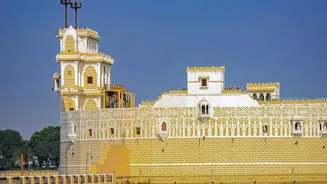
The Shekhawati region is easily accessible, located within a triangle formed by Delhi, Jaipur, and Bikaner. The key towns to anchor your visit are Nawalgarh, often considered the heart of Shekhawati, with beautifully restored properties like the Podar Haveli Museum; Mandawa, known for its fort and dense concentration of decorated mansions; and Fatehpur, home to the culturally significant Nadine Le Prince Haveli. Beyond admiring the frescoes, a trip here is about slowing down. It’s about sipping tea in a quiet courtyard, exploring vibrant local markets, and experiencing a side of Rajasthan that remains deeply connected to its artistic and mercantile past.