





The New Calculus: Cinema as an Event
For many young moviegoers, particularly Gen Z, the question is no longer just 'what's good?' but 'what's worth the trip?'. Recent studies show that while this generation is surprisingly enthusiastic about cinemas, their motivation has changed. Gen Z now
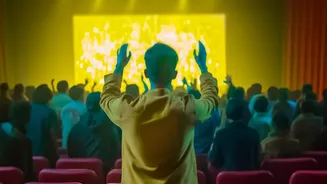
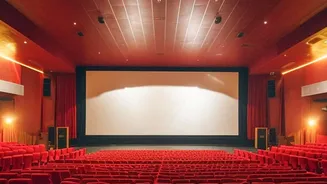
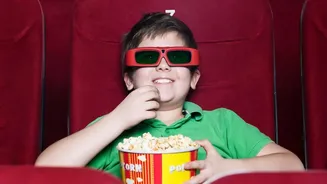
represents the most frequent moviegoing demographic, but they view the theater primarily as a venue for social, premium experiences. It's less about passive viewing and more about participating in a cultural moment. This makes spectacle films—massive blockbusters, immersive sci-fi, and major franchise entries—the main draw. They attend with friends, often opt for premium formats like IMAX, and make a night of it with dinner and drinks. This transforms the multiplex from a simple screening room into an event space, reserved for movies that feel larger than life.
The Streaming Default for Everything Else
So, where do the other films go? For the most part, they go home. Dramas, comedies, character studies, and thrillers—the 'non-spectacle' films—are increasingly seen as content best suited for streaming services. The convenience and vast libraries of platforms like Netflix and others have trained audiences to expect this type of movie to be available at their fingertips, often just weeks after a theatrical run. The decision is economic as much as it is behavioral. When a single movie ticket can cost as much as a month's subscription to a streaming service, the value proposition for a quieter, less bombastic film becomes much harder to justify for a theatrical outing. This has created a two-tiered system: event films for the cinema, everything else for the couch.
Social Media as the Great Filter
The path a film takes to becoming a theatrical 'must-see' for young audiences often runs directly through social media. Platforms like TikTok and Instagram have become powerful discovery engines, where trailers, memes, and fan-generated content can turn a movie into a viral phenomenon. According to one study, over half of TikTok users have discovered a new show or movie on the app. This environment naturally favors spectacle. Big visual moments, shocking plot twists, and highly meme-able scenes are more likely to cut through the noise than nuanced dialogue or slow-burn drama. As a result, a film's potential for social media buzz is now a critical factor in driving young audiences to the box office, further separating the blockbusters from the rest.
A Glimmer of Hope for the 'Middle'
While the focus on spectacle has squeezed mid-budget films, it hasn't entirely eliminated them. There's a growing recognition in Hollywood that audiences are experiencing a degree of franchise fatigue. This has created an opening for original, well-crafted films with moderate budgets to find success. Horror, in particular, has proven to be a resilient genre, as the communal experience of being scared is something streaming can't replicate. Furthermore, some analysts point to a quiet resurgence of mid-budget movies, which offer a healthier return on investment compared to risk-heavy blockbusters. These films succeed by focusing on strong stories and memorable characters, proving that 'spectacle' doesn't always have to mean a nine-figure budget. The success of creator-driven films that began on platforms like YouTube also shows an alternative path to theatrical relevance.