







A Dramatic Diversion
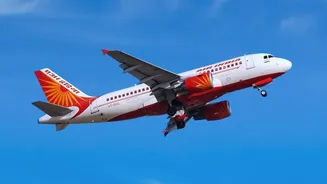
Air India flight AI2030, a Boeing 787-9 travelling from Frankfurt to Delhi on Wednesday, was unexpectedly diverted to Jaipur International Airport. The flight, carrying 293 passengers and 13 crew members, landed safely in Jaipur around 9:35 am and was immediately
moved to an isolation bay, a designated area for aircraft facing security threats. Passengers were initially told the diversion was for 'security reasons', leading to confusion and concern on board. One passenger recounted seeing firefighters after landing, initially suspecting an engine failure before the scale of the security presence became clear.
The Ground Response
Once the alert was triggered, a well-rehearsed but intense security protocol swung into action. At Jaipur airport, teams from the Central Industrial Security Force (CISF), local police, and even the Bomb Detection and Disposal Squad (BDDS) were mobilised. After landing, passengers remained on the aircraft for approximately two hours before being deplaned for security screening. Their baggage and the aircraft itself underwent a thorough inspection by multiple agencies. Air India confirmed all passengers and crew were safely cleared after the necessary checks before being allowed to reboard for the final leg of their journey to Delhi.
The Mystery of the False Alert
The central question is what triggered such a serious response. The alert seems to have originated while the aircraft was in the Mumbai Flight Information Region. Some initial reports suggested the pilot had activated 'Squawk 7500', the universal transponder code for a hijacking. However, subsequent reports and sources familiar with the investigation indicate the pilots have denied sending this code. The focus of the Directorate General of Civil Aviation (DGCA) investigation has now shifted towards a potential technical issue, specifically with a newly installed air traffic control (ATC) radar system in Mumbai that may have erroneously generated the alert. Senior pilots have noted that accidentally entering the four-digit 7500 code is highly improbable, as it must be done manually, lending weight to the theory of a ground-based system error.
Aviation Security Under the Microscope
Even though it was a false alarm, authorities followed established security procedures by assuming the worst-case scenario. When an ATC system receives a hijack code, the aircraft's target on the radar screen turns red and an alarm sounds, mandating an immediate response. In this case, even after the flight crew communicated that everything was normal onboard, the protocol required the flight to be diverted for a physical inspection. The incident, while disruptive, served as a real-world test of the aviation industry's 'better safe than sorry' approach to potential threats. The Civil Aviation Minister, K. Rammohan Naidu, has stated that any changes to security norms will await the final report from the DGCA's probe.