






What Exactly Is PJ.2.1?
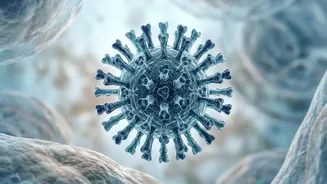
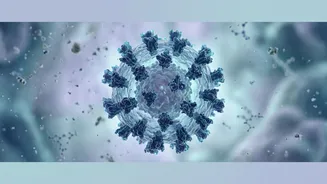
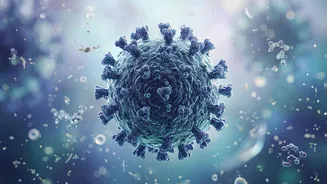
PJ.2.1 is a new lineage of the SARS-CoV-2 virus, descending from the widespread JN.1 family. Scientists have described it as a 'saltation variant', which means it appeared with a large number of genetic changes at once, rather than evolving slowly over
time. These mutations, particularly the 25-plus changes in its spike protein, are what caught the attention of genomic surveillance programs. The spike protein is what the virus uses to enter human cells, so significant changes here are always monitored closely by the scientific community. The first documented sample was collected on May 2, 2026, in Ontario, Canada.
What Does the Surveillance Data Show?
Genomic surveillance, which involves sequencing the virus from test samples, is our primary tool for tracking new variants. Data shows PJ.2.1 has spread from Canada to the United States, and has also been detected in several countries in Europe, Asia, and Oceania, including Spain, France, Singapore, and Australia. In some regions, its prevalence is growing. For instance, in Ontario, it accounted for 25.2% of sequenced cases between late September and mid-October 2026, up from 16.9% in the prior four-week period. Wastewater surveillance in the US also suggested it was the fastest-growing variant at the time of analysis, indicating it is spreading efficiently.
Is It More Dangerous or Transmissible?
This is the crucial question with any new variant. Currently, there is no evidence to suggest that PJ.2.1 causes more severe illness, hospitalisations, or deaths than other circulating variants. Health officials emphasize that its emergence is a reason for continued monitoring, not panic. Laboratory studies published in the 'Journal of Infection' found that PJ.2.1 binds more strongly to the ACE2 receptor, the 'doorway' into human cells. This enhanced binding might contribute to its transmissibility, but it doesn't automatically mean it will cause more severe disease. Encouragingly, the same studies found that PJ.2.1 does not seem to be significantly better at evading antibodies from existing vaccines compared to other variants.
What Are the Symptoms to Watch For?
There are no unique symptoms confirmed to be specific to PJ.2.1. The symptoms are consistent with other COVID-19 variants and respiratory illnesses like the flu. These include fever, cough, sore throat, runny or blocked nose, body aches, headache, and fatigue. The World Health Organization (WHO) and other health bodies stress that symptoms alone cannot distinguish between COVID-19 variants or other viruses, making diagnostic testing the only reliable method for confirmation. As of early November 2026, there have been no confirmed reports of PJ.2.1's detection in India, but the country's genomic surveillance network, INSACOG, continues to monitor the situation.
The Importance of Ongoing Monitoring
The emergence of lineages like PJ.2.1 highlights why robust global genomic surveillance is critical. The constant evolution of SARS-CoV-2 is an expected part of the virus's life cycle. Health agencies like the WHO track these changes to assess any potential public health risk. While PJ.2.1 is being monitored by scientists, it has not been officially designated as a 'Variant of Interest' or 'Variant of Concern' by the WHO in its latest public updates. This classification is reserved for variants that show evidence of increased transmissibility, severity, or immune escape that could pose a significant public health challenge. Researchers and public health bodies will continue to track PJ.2.1's spread and study its characteristics to stay ahead of the virus.