



Embrace the Main Attraction
Instead of fighting the moonlight, make the Moon itself your primary target. Many astronomers argue that while a full moon's direct light flattens features, it's still a magnificent object to behold. Use a pair of binoculars or a small telescope to explore
the vast, dark patches known as maria, which are ancient volcanic lava flows. You can also observe the bright ray systems that streak outwards from prominent craters like Tycho and Copernicus. These rays are material ejected during the violent impacts that formed the craters and are most prominent during a full moon. A simple moon filter can reduce the dazzling brightness, making for a more comfortable and detailed viewing experience.
Hunt for Brighter Targets
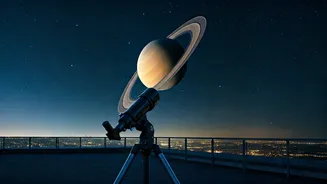
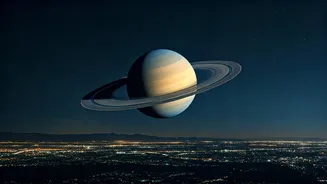
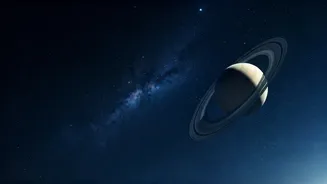
While faint nebulae and distant galaxies are off the table, the night sky still offers plenty of bright objects that can punch through the moonlit haze. The planets—particularly Jupiter, Saturn, Mars, and Venus—are bright enough to remain excellent targets. Bright, open star clusters like the Pleiades can also be rewarding, as their stars are often brilliant enough to outshine the glare. Even learning the major constellations can be easier during a full moon because the glare conveniently blots out the dimmer, more confusing stars, leaving only the brightest to form the classic shapes.
Use Your Surroundings Strategically
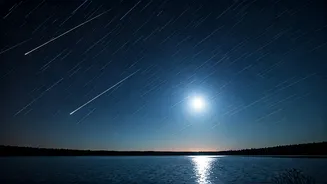
You don't always need special equipment to manage the Moon's glare; sometimes, a bit of clever positioning is all it takes. Find a viewing spot where you can strategically place a hill, a building, or a dense line of trees between you and the Moon. By blocking the Moon's direct light, you can create a pocket of relative darkness, allowing your eyes to better adapt and pick out fainter objects in other parts of the sky. This technique is especially useful if you're trying to view a meteor shower or other event that occurs during a bright lunar phase.
Try Nightscape Astrophotography
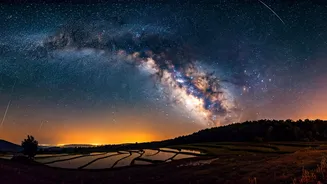
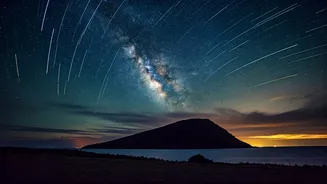
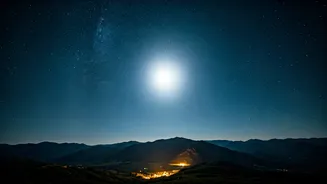
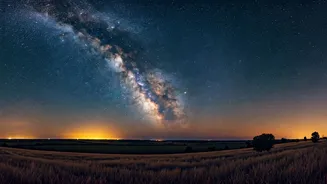
For photographers, a full moon can be a blessing in disguise. While it washes out deep-sky objects, it acts as a giant, free light source for illuminating terrestrial landscapes. This is a perfect opportunity to try nightscape photography, where you combine a dramatic foreground—like mountains, trees, or a lake—with the starry sky. The moonlight will light up the landscape, creating detailed and often surreal images that aren't possible on a dark, moonless night. For taking pictures of the moon itself without the glare, use your camera's manual mode to lower the exposure and ISO settings.
Plan with the Lunar Calendar
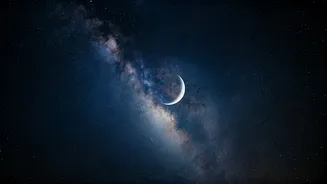
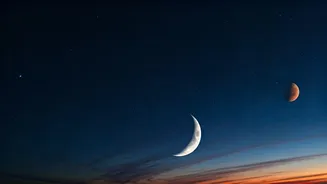
The best workaround is often good planning. The nights around the new moon offer the darkest skies, ideal for viewing faint objects like the Milky Way. Keep a lunar calendar handy to know when the full moon will occur and plan your deep-sky observations for the weeks surrounding the new moon. For India, the next full moon in July 2026 will be on July 29. The days leading up to and after the full moon are also quite bright, so for the best stargazing conditions, aim for the week before and after the new moon, which in July 2026 falls on July 14.