



A Nursery of Crimson and Blue
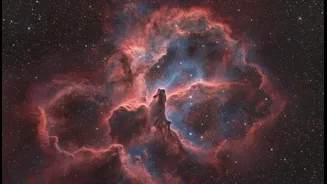
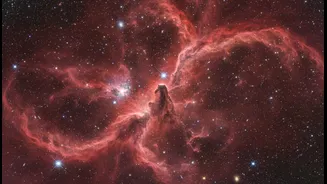
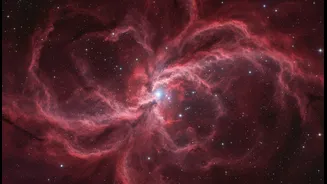
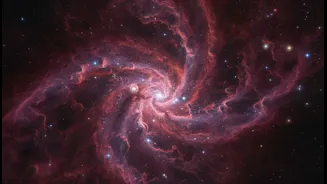
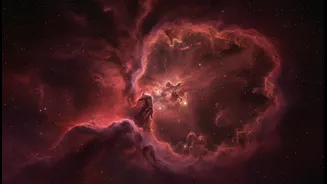
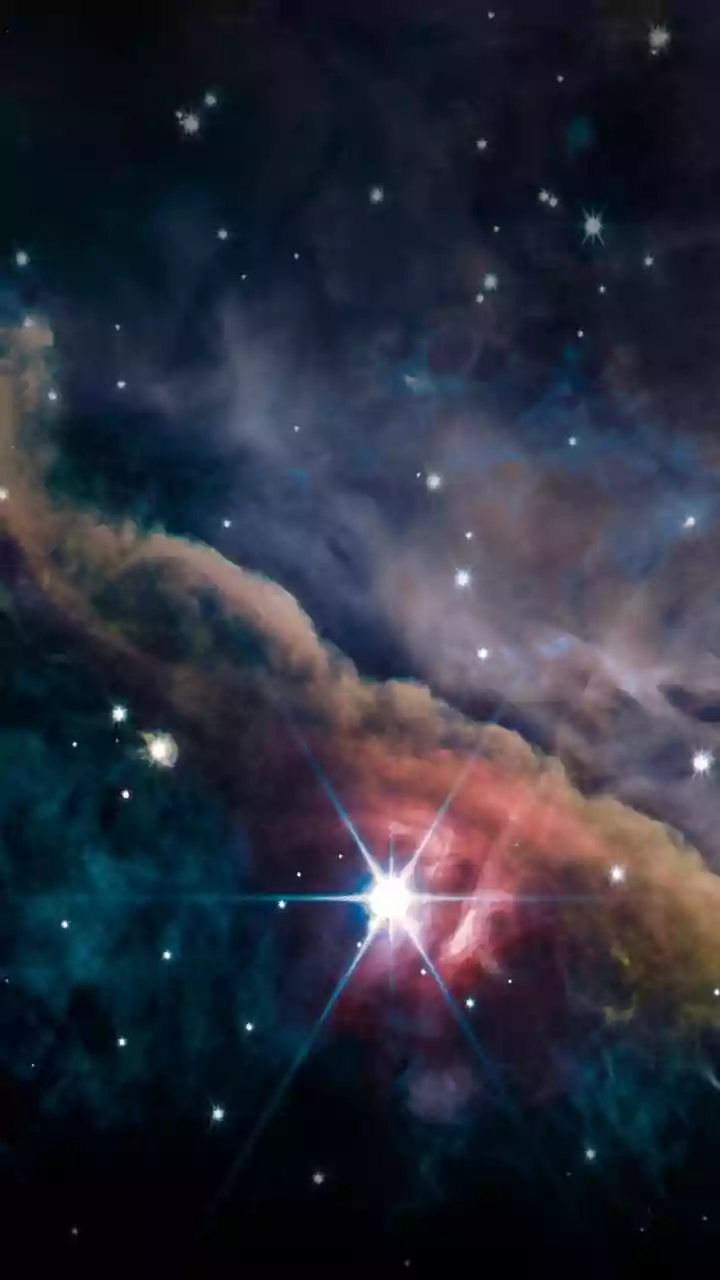
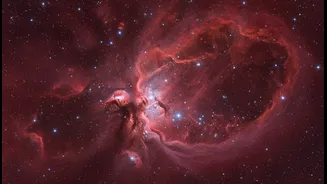
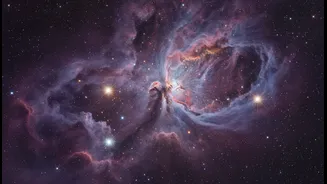
Like cosmic fireworks against a smoky backdrop, a spectacular new image has captured a brilliant stellar nursery known as LH 95. Located in the Large Magellanic Cloud, a small satellite galaxy orbiting our own Milky Way, this region is a bustling city
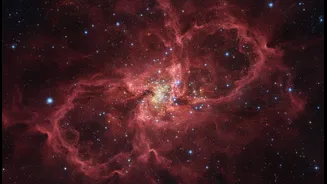
of stars, home to both tiny infant stars and massive blue giants. What makes the recent images from the Hubble Space Telescope so breathtaking is the vibrant colour. The scene is dominated by a vivid crimson glow, which comes from superheated hydrogen gas—a tell-tale sign that new stars are actively being born. This glowing hydrogen, threaded with dark ribbons of cosmic dust, creates the appearance of a “Crimson Nebula,” offering a front-row seat to the beautiful chaos of star formation. The bright blue and white stars sparkling within are the newly formed, massive stellar residents that are sculpting their environment with powerful radiation.
A Clearer Window Into Creation
While stellar nurseries are found throughout the universe, LH 95 is particularly valuable to astronomers. Many similar regions within our own Milky Way are shrouded in thick dust, obscuring our view of the processes within. LH 95, however, offers a much clearer and more direct look at the action. This clarity allows telescopes like Hubble to peer deep inside and study individual stars and their development. The new observations are so detailed that they have revealed multiple generations of stars existing side-by-side, suggesting that star formation in this region is not a single, monolithic event, but a continuous process unfolding over millions of years. This multi-generational family of stars provides a unique cosmic laboratory for understanding how stellar communities evolve.
Stars That Keep on Growing
Perhaps the most significant discovery from this fresh look into LH 95 concerns the very nature of how stars grow. Astronomers identified approximately 2,500 “pre-main-sequence” stars—infant stars that have nearly gathered all their mass but have not yet ignited nuclear fusion in their cores. The prevailing wisdom was that this stage of gathering material from a surrounding disk of gas and dust was relatively brief. However, the new Hubble data reveals a different story. These young stars can continue to accrete, or pull in, matter for several million years, a much longer period than some models had assumed. This finding fundamentally refines our understanding of the timeline of stellar development, showing that the adolescent growth spurt of a star can last much longer than previously thought.
The Case of the Younger Giant
Adding another layer of intrigue to the story of LH 95 is the discovery of an apparent anomaly among its stellar population. While most of the stars in the area are estimated to be around 4 million years old, researchers pinpointed one particularly massive star—weighing in at 60 to 70 times the mass of our Sun—that appears to be about a million years younger than its neighbours. Such a massive star burns through its fuel incredibly quickly and will have a short and dramatic life, ending in a spectacular supernova. Its relative youth compared to the surrounding population presents a fascinating puzzle. It provides strong evidence that star formation is an ongoing, staggered process and helps scientists build more accurate models of how these immense cosmic nurseries function and evolve over time, seeding galaxies with new stars and, eventually, the heavy elements needed for planets and life.