





What Exactly Are Perovskite Solar Cells?
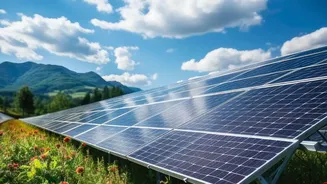
Think of solar panels, and you likely picture rigid, dark blue rectangles made of silicon. For decades, silicon has been the workhorse of the solar industry. Perovskites are a different class of material with a specific crystal structure. Unlike highly
purified silicon which is expensive and energy-intensive to produce, perovskites can be made from more common, cheaper materials. Even better, they can be processed into a thin, flexible, and lightweight film, almost like an ink, which opens up a world of possibilities for how and where we can generate solar power. Their key advantage lies in how they absorb light. The unique structure of perovskites allows them to be 'tuned' to capture different parts of the light spectrum, especially the high-energy blue light that silicon struggles with. This superior light absorption is the secret behind their headline-grabbing performance.
The Breakthroughs: Pushing Past Silicon's Limits
Standard silicon solar panels have been improving for over 60 years, but their efficiency is hitting a natural ceiling of around 27-29% due to the physical properties of the material. This is where perovskites are causing a stir. In lab conditions, scientists are now creating 'tandem' cells by placing a thin layer of perovskite on top of a traditional silicon cell. This combination is proving to be a powerhouse. The perovskite layer captures the blue light, and the remaining light passes through to the silicon layer below, which absorbs the red light. This two-for-one approach wastes less sunlight and dramatically boosts overall efficiency. Recent records for these perovskite-silicon tandem cells have soared past 34%, a significant leap beyond what silicon can achieve alone.
The Promise of Lower Costs
Higher efficiency is only half of the story. The other major promise of perovskite technology is its potential for lower manufacturing costs. Fabricating silicon panels requires extremely high temperatures and vacuum conditions in a process that is both expensive and energy-consuming. Perovskites, on the other hand, can be created through simpler, lower-energy processes. In theory, higher efficiency means you need fewer panels to generate the same amount of power, reducing not just the panel cost but also installation and hardware expenses. While current manufacturing costs for the first commercial perovskite modules are still higher than mass-produced silicon, analysts expect this gap to close as production scales up and processes are refined. The long-term vision is a technology that is both more powerful and more affordable than what is available today.
Hurdles on the Road to Your Rooftop
Despite the excitement, you won't be able to install perovskite panels on your home just yet. The biggest challenge has been durability. Early perovskite materials degraded quickly when exposed to moisture, heat, and oxygen—all unavoidable elements in the real world. While researchers have made huge strides in improving stability with new materials and protective encapsulation techniques, they still don't match the 25-plus year lifespan of conventional silicon panels. Some of the first commercial tandem panels have warranties closer to 10 years, though the goal is to reach 20 or more. Other concerns include the use of lead in some perovskite formulas, which requires careful management to prevent environmental contamination. These hurdles of stability, longevity, and safe scale-up are what separate lab records from a reliable product you can buy.
When Can You Expect Cheaper Electricity?
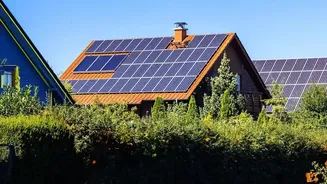
So, when will this technology start making a difference to your electricity bill? The rollout has already begun for some large-scale commercial and utility projects. However, for residential use, the consensus is that mainstream availability of perovskite-based panels with long-term warranties is still a few years away, likely between 2027 and 2030. The first generation of products will likely be a premium offering, and it will take time for mass manufacturing to bring costs down significantly. For homeowners considering solar in 2026, the best options remain the highly efficient silicon panels currently on the market, such as TOPCon and HJT models. Waiting for perovskites means missing out on several years of potential savings that current technology can already provide.