







A Global Tech Shutdown
In mid-November 2026, a significant technical failure at Microsoft caused a widespread outage. Services including Outlook email, Teams, and other Microsoft 365 applications became inaccessible for businesses and governments across more than 70 countries.
The disruption, which Microsoft attributed to a network configuration issue rather than a cyberattack, lasted for over 24 hours, causing chaos from Australia to the United States. Airlines faced customer service delays, companies postponed earnings calls, and some government offices were forced to resort to old-fashioned telephone communication as their digital tools failed.
India's Digital Lifeline
While Indian businesses and some airlines reported disruptions, the story for the country's core government services was markedly different. As the world grappled with the outage, India’s key public service platforms, such as core banking systems and citizen service portals, largely continued to function without public reports of systemic failure. The reason lies in the architecture of India's digital state, which is largely managed by the National Informatics Centre (NIC), a body under the Ministry of Electronics and Information Technology. The NIC is responsible for the government's entire ICT infrastructure, from networks to data centres.
The Architectural Divide Explained
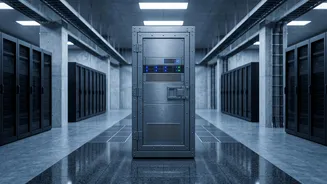
The key to this resilience is a 'separate technology architecture'. In simple terms, instead of relying completely on global public cloud services like Microsoft Azure for all its needs, the Indian government has built its own parallel infrastructure. This includes NICNET, a nationwide government network, and national data centres that host the government's own cloud initiative, called 'MeghRaj'. This 'government cloud' provides secure and scalable computing resources specifically for government departments. For example, the official government email system, with its nearly 1.7 million users, runs on this sovereign infrastructure, which was upgraded in 2023 with Zoho as a technology partner under the NIC's framework. This separation means that even if a global provider like Microsoft has a problem, the Indian government’s custom-built systems can remain insulated and operational.
A Strategy of Digital Sovereignty
This approach is part of a broader strategy known as 'digital sovereignty'. The idea is for a nation to maintain control over its own digital destiny, including its data, hardware, and software infrastructure. By building and managing its own platforms, the government ensures that critical citizen data and essential services are not solely dependent on foreign commercial entities. This not only protects against global outages but also provides greater control over data security and privacy, aligning with national regulations like the Digital Personal Data Protection Act. While it doesn't mean isolating from global technology, it involves making deliberate choices about which systems are too critical to outsource completely. The recent Microsoft outage served as a real-world stress test, validating the argument that a hybrid approach—using the best of global tech while retaining sovereign control over core functions—is a powerful strategy for national resilience.