








Why Your Morning Needs More Fibre
Fibre is a type of carbohydrate that your body can't digest, which is precisely why it's so beneficial. Starting your day with a fibre-rich meal helps regulate blood sugar by slowing down the absorption of sugar into the bloodstream. [2, 8, 13] This prevents
the dreaded mid-morning energy crash that often follows a breakfast high in refined carbohydrates and sugar. [2] Furthermore, fibre keeps you feeling fuller for longer, which can help with weight management by reducing the urge to snack before lunch. [3, 5, 15] There are two types of fibre: soluble and insoluble. Soluble fibre, found in oats, apples, and beans, dissolves in water to form a gel-like substance that aids in lowering cholesterol and blood sugar. [13, 15] Insoluble fibre, present in whole grains and nuts, adds bulk to stool and promotes regular bowel movements, keeping your digestive system running smoothly. [2, 13] A balanced intake of both is key to reaping the full benefits.
Overnight Oats: The Ultimate Time-Saver
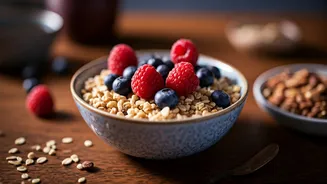
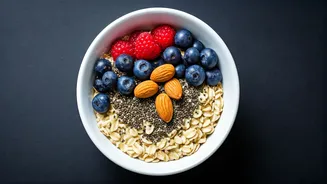
For those with zero time to spare in the morning, overnight oats are a game-changer. The concept is simple: combine rolled oats, your milk of choice, and a variety of fibre-boosting additions in a jar before you go to bed. While you sleep, the oats soften and absorb the liquid, creating a creamy, ready-to-eat breakfast. To maximise the fibre content, add a tablespoon of chia seeds (which provide about 5 grams of fibre) or ground flaxseeds. [14, 19] A half-cup of rolled oats itself offers around 4 grams of fibre. [7] Top it off with a handful of raspberries or blackberries, which are among the most fibre-dense fruits, to easily create a breakfast with over 10 grams of fibre. [7, 14]
The Power-Packed Smoothie
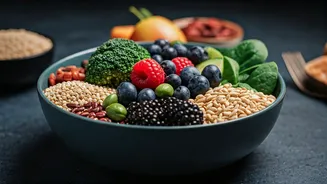
A smoothie can be a fantastic high-fibre option, provided you build it correctly. To avoid a simple sugar rush, focus on including ingredients that offer a good balance of fibre, protein, and healthy fats. Start with a base of leafy greens like spinach, which you won't even taste but adds a gram or two of fibre. [14] Add half an avocado for creaminess and a significant fibre boost of about 5 grams. [14] Fruits like bananas and berries are excellent additions. [6] For an extra fibre punch, blend in a tablespoon of chia seeds, flaxseeds, or even psyllium husk. [14, 17] This combination turns a simple drink into a satisfying meal that supports sustained energy and digestive health.
Savoury Solutions for a Strong Start
Not everyone has a sweet tooth in the morning. Luckily, savoury breakfasts can be just as high in fibre. A classic choice is avocado toast, but make sure you're using whole-grain or whole-wheat bread, which can contain 3-5 grams of fibre per slice. [7, 21] Mashed avocado on top adds healthy fats and more fibre. [7] Another excellent option is a veggie-packed egg scramble. While eggs themselves don't contain fibre, they are a great source of protein. Load your scramble with spinach, mushrooms, and bell peppers, and serve it with a side of black beans. [9] Just half a cup of black beans can pack around 7.5 grams of fibre. [6]
Quick Swaps for an Instant Fibre Boost
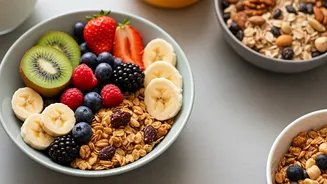
Increasing your morning fibre intake doesn't always require a complete meal overhaul. Small, strategic swaps can make a big difference. If you enjoy yoghurt, opt for plain Greek yoghurt and top it with high-fibre granola, berries, and a sprinkle of seeds. [19] If you have a favourite breakfast cereal, check the label and choose one that offers at least 5 grams of fibre per serving. [13] Even simply leaving the skin on your apple or pear can add an extra gram or two of fibre to your morning snack. [7] In India, where traditional breakfasts like poha or upma are popular, using whole grain variants like brown rice poha or millets like ragi for upma can significantly increase fibre content. [4, 22] The recommended daily fibre intake for Indian adults is around 25-30 grams, but many consume only about half of that. [4]