




1. Makhan Mishri
No Janmashtami bhog is complete without Makhan Mishri, an ode to Lord Krishna’s famous love for butter. As the original ‘Makhan Chor’ (butter thief), this offering is the most iconic and simplest to prepare. It requires no cooking, symbolizing a pure
and heartfelt offering of love. The combination of freshly churned white butter and the subtle sweetness of rock sugar is believed to be one of Krishna’s absolute favourites. To prepare it, take about one cup of fresh, unsalted white butter (makhan). If using cream (malai), churn it with a little cold water until the butter solids separate. Collect the butter and gently mix in two to three tablespoons of mishri (rock sugar). Transfer to a small earthen pot or bowl and garnish with a fresh tulsi leaf before offering.
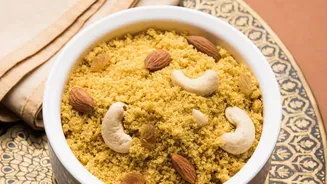
2. Dhaniya Panjiri
Dhaniya Panjiri is a unique and aromatic prasad traditionally made for Janmashtami. Unlike other sweet preparations, its base is roasted coriander powder, which gives it a distinct, earthy flavour. It is often consumed by devotees to break their fast after the midnight puja. To make this fragrant offering, heat two tablespoons of ghee in a pan. Add half a cup of coriander powder and roast on a low flame until it turns golden brown and aromatic. Remove from heat and let it cool slightly. In the same pan, roast a quarter cup of mixed chopped nuts like almonds and cashews, along with some makhana (fox nuts). Once everything has cooled, combine the roasted coriander powder, nuts, and half a cup of powdered sugar. Mix well until everything is incorporated. The resulting mixture is a crumbly, nutritious, and deeply traditional prasad.
3. Gopalkala (Dahi Poha)
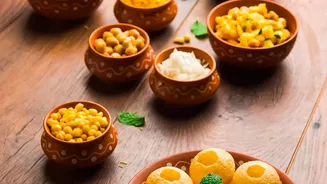
Gopalkala is a delightful savoury preparation that brings together some of Krishna’s favourite ingredients. Hailing from Maharashtra, this dish is a refreshing mix of flattened rice (poha), yogurt (dahi), and fresh cucumber. It is said to represent the simple meal Krishna would share with his friends. To prepare Gopalkala, wash one cup of thick poha and let it soften for a few minutes before draining the excess water. In a bowl, combine the soaked poha with half a cup of yogurt, half a finely chopped cucumber, and a tablespoon of grated fresh coconut. Add salt to taste. For the tempering, heat a teaspoon of ghee in a small pan, add a pinch of cumin seeds and a chopped green chilli, and let them splutter. Pour this tempering over the poha mixture and mix gently. Garnish with fresh coriander before serving.
4. Makhana Kheer
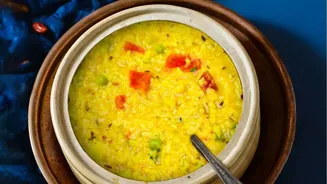
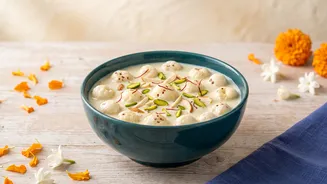
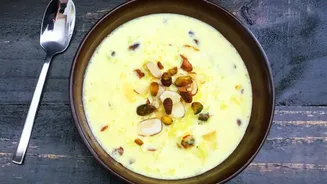
A rich and creamy kheer is a festive staple, and using makhana (fox nuts) makes it perfect for Janmashtami, as they are considered a pure food suitable for fasting. This lotus seed pudding is both delicious and wholesome. Start by heating a tablespoon of ghee in a pan and roasting one cup of makhana until they become crisp. Set them aside and lightly crush them once cooled. In a heavy-bottomed pot, bring half a litre of full-fat milk to a boil. Add the crushed makhana and let it simmer on low heat, stirring occasionally, until the makhana becomes soft and the milk thickens. This should take about 15-20 minutes. Add sugar to your taste, a pinch of cardamom powder, and some chopped nuts like almonds and pistachios. Simmer for another few minutes before turning off the heat. This kheer can be offered warm or chilled.
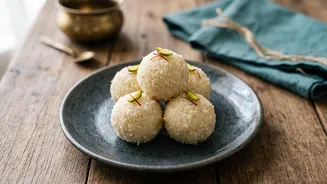
5. Nariyal Ladoo
Nariyal Ladoos, or coconut sweet balls, are incredibly easy to make and are a popular choice for festive offerings. Their preparation is quick, requiring just a few ingredients. In a pan, combine two cups of desiccated coconut with one can (about 400 grams) of sweetened condensed milk. Place the pan on low heat and cook the mixture, stirring continuously, for about 5 to 7 minutes. The mixture will start to thicken and leave the sides of the pan. Be careful not to overcook, as it can become dry. Turn off the heat and stir in half a teaspoon of cardamom powder. Allow the mixture to cool just enough so you can handle it. Grease your palms with a little ghee and roll small portions of the mixture into round ladoos. You can roll the finished ladoos in some extra desiccated coconut for a classic finish. Let them set for an hour before offering.
6. Mewa Paag
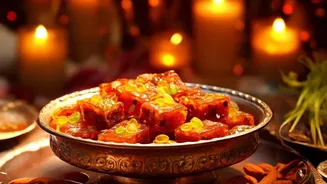
Mewa Paag is a rich, brittle-like sweet packed with nuts and dried fruits, perfect for a grand festive celebration. While it looks elaborate, a simplified version can be made at home. Start by roasting a variety of nuts and seeds in ghee. In a pan, heat a tablespoon of ghee and fry half a cup of chopped almonds and cashews until golden. In the same pan, roast one cup of makhana until crisp. You can also roast a quarter cup of melon seeds. Coarsely grind the roasted makhana and nuts. Now, prepare the sugar syrup. In a separate pan, combine one cup of sugar with half a cup of water. Boil until the syrup reaches a one-string consistency. To check, take a drop between your thumb and forefinger; a single thread should form when you pull them apart. Turn off the heat and quickly mix in all the roasted nuts, seeds, and half a teaspoon of cardamom powder. Immediately pour the mixture onto a greased plate or tray and spread it evenly. Let it cool completely before breaking it into pieces.