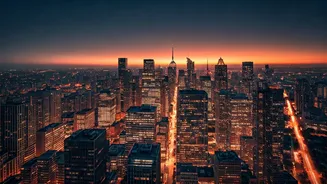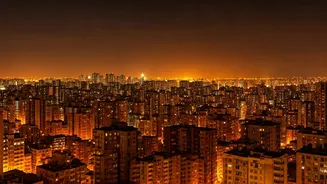






Meet the Urban Heat Island
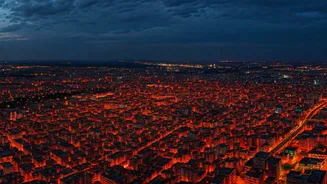
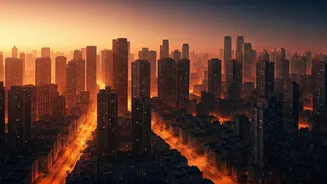
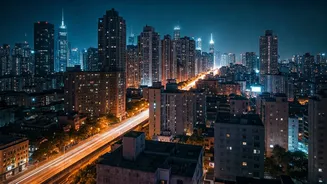
The primary culprit behind sweltering city nights is a phenomenon known as the 'urban heat island' effect. In simple terms, cities are significantly warmer than their surrounding rural areas. Studies show this difference can be dramatic, with night-time
temperatures in some urban neighbourhoods remaining up to 4°C warmer. This happens because the natural landscape, with its soil, water, and vegetation, has been replaced by dense concentrations of buildings, roads, and other man-made structures that absorb and retain heat far more effectively.
Our Cities are Built of Heat Sponges
Think about the materials that dominate our cityscapes: concrete, asphalt, bricks, and dark-coloured roofing. During the day, these materials soak up huge amounts of solar radiation. Unlike natural ground, which cools relatively quickly after sunset, these dense materials release the stored heat slowly and steadily throughout the night. An asphalt road, for example, can absorb up to 95% of the sunlight that hits it, effectively becoming a massive, slow-cooking radiator long after dark. This constant emission of stored heat keeps the ambient air temperature uncomfortably high, turning many homes into heat traps.
The Disappearance of Natural Coolants
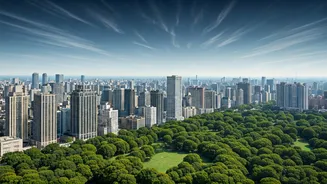
Rapid urbanisation has come at the cost of green and blue spaces. Trees, parks, lakes, and wetlands are a city's natural air conditioners. Trees provide shade, which prevents surfaces from absorbing heat in the first place. More importantly, through a process called evapotranspiration, vegetation and water bodies release moisture into the air, which has a powerful cooling effect. As Indian cities have expanded, these vital green lungs and water bodies have been systematically replaced by concrete, eliminating a crucial mechanism for dissipating daytime heat. The loss of this natural cooling infrastructure is a major reason why nights feel increasingly hotter.
How We Make the Problem Worse
Our own activities contribute significantly to the night-time heat. This is often called 'anthropogenic heat'. Every vehicle, every industrial process, and most critically, every air conditioner, pumps waste heat into the surrounding environment. Air conditioners create a vicious cycle: as nights get warmer, more people use ACs to cool their homes. These units work by pulling heat from inside a building and dumping it outside, further raising the ambient temperature of the neighbourhood. Research shows this waste heat can raise local night-time temperatures by more than 1°C, increasing the overall heat load on the city.
Trapped by Design
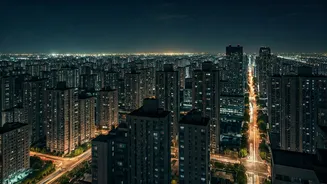
The very layout of modern cities can work against night-time cooling. Densely packed high-rise buildings create what are known as 'urban canyons'. These narrow street corridors trap heat and block the natural flow of wind, which would otherwise help to carry warm air away. The reduced 'sky view factor' means that heat radiated from buildings and streets is often absorbed by neighbouring structures rather than escaping into the upper atmosphere. This physical trapping of heat, combined with the material choices and lack of green space, creates a perfect storm for uncomfortably warm nights.