


Let Your Eyes Adapt to the Dark
The first and most crucial step for any budding stargazer is to allow your eyes to fully adapt to the darkness. City dwellers are so accustomed to artificial light that we forget how much our eyes can see naturally. It takes about 20 to 30 minutes for your pupils
to dilate completely and for your night vision to kick in. During this time, avoid looking at bright screens, like your phone. If you need a light to read a star chart or find your way, use a red flashlight, as red light is less disruptive to your night vision. Patience here is key; the longer you wait, the more stars will seem to magically appear.
Find the Right Spot
To see the stars, you need to escape the light. Light pollution from cities creates a 'skyglow' that washes out all but the brightest celestial objects. For the best experience, try to find a location away from city lights, like a park, a rural area, or even a rooftop with minimal direct lighting. Use online light pollution maps to find darker skies near you. Even if you're stuck in the city, you can improve your view by shielding your eyes from immediate light sources like street lamps. Finding a spot with a clear, unobstructed view of the horizon will also enhance your stargazing session.
October's Celestial Highlights
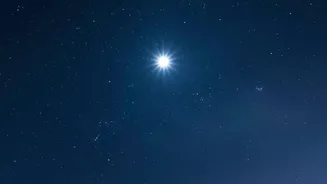
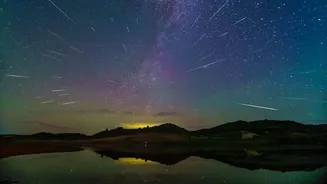
October 2026 is a fantastic month for stargazers. Early in the month, look for Saturn, which reaches its opposition on October 4. This means it will be at its closest and brightest for the year, rising around sunset and visible all night. The main event for naked-eye observers is the Draconid meteor shower, peaking on the evening of October 8-9. Unlike many showers best seen after midnight, the Draconids are best viewed in the early evening. This year's peak has excellent conditions, as it occurs near the new moon, promising dark skies. Later in the month, the Orionid meteor shower, debris from Halley's Comet, peaks on October 21-22. While a bright moon will interfere, the best time to watch will be in the dark hours before dawn after the moon has set.
Use a Digital Guide on Your Phone
While you should avoid your phone's bright screen once your eyes have adapted, a stargazing app is an invaluable tool for beginners. Free apps like Stellarium Mobile, SkyView Lite, or Star Walk 2 can help you identify what you're seeing. These apps use your phone's GPS and compass to create a real-time map of the sky. Just point your phone upwards, and the app will show you the names of stars, constellations, and planets in that direction. Many have a 'red light mode' to help preserve your night vision while you use them.
Learn a Few Key Constellations
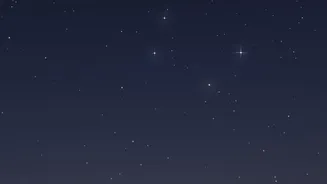
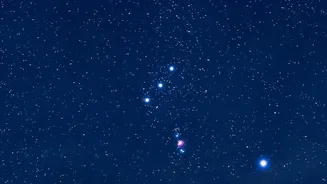
The night sky can feel overwhelming at first, so start small. Instead of trying to learn everything at once, focus on identifying a few major constellations. Orion, with its distinctive three-star belt, is one of the easiest to spot and will be visible later in the evening this month. The Draconid meteor shower gets its name because its meteors appear to radiate from the constellation Draco the Dragon. Learning to find these anchor points will help you navigate the sky and locate other objects of interest on your celestial journey.
Get Comfortable and Be Patient
Stargazing is an act of relaxation and patience. You'll be looking up for a long time, so comfort is essential. You'll be looking up for a long time, so comfort is essential. Bring a blanket to lie on or a reclining chair to avoid straining your neck. Even on milder evenings, the temperature can drop, so dress in warm layers and consider bringing a hot drink. Meteors often come in spurts, and your eyes will pick up more detail the longer you look. Don't be discouraged if you don't see a shooting star right away. The reward of watching the cosmos unfold above you is well worth the wait.