







The Shift from Secret to Shared
For decades, data from major space missions was the exclusive domain of a select group of scientists and their institutions, often for a year or more. This ‘proprietary period’ gave them a head start on research. Now, that model is being disrupted. Space
agencies, led by NASA, are increasingly embracing a policy of open science, making vast archives of data from Earth observation and deep space missions accessible to the public. This shift is founded on a simple but powerful idea: the more eyes you have on a problem, the faster you’ll find a solution. By removing barriers, these agencies aim to accelerate the pace of scientific breakthroughs and ensure that discoveries are not limited by geography or institutional affiliation.
A Telescope That Holds Nothing Back
The most dramatic example of this trend is the Nancy Grace Roman Space Telescope. Expected to launch in the near future, Roman will survey the cosmos to unravel the secrets of dark energy and hunt for exoplanets. Its scientific potential is immense, but its data policy is revolutionary: all data will be made public immediately, with no proprietary period whatsoever. The mission will generate an astonishing volume of information, far more than previous telescopes like Hubble. Similarly, data from the Europa Clipper mission, which launched in 2024 to investigate Jupiter's icy moon, will be publicly archived within six months of collection, opening the door for global participation in the search for habitable environments beyond Earth.
Why Open Access Is a Game-Changer
Making cosmic datasets public creates a force multiplier for research. Scientists outside the primary mission teams can bring fresh perspectives and different analytical techniques, often leading to discoveries that the original investigators never anticipated. It allows for cross-mission analysis, where data from different telescopes and instruments can be combined to paint a more complete picture of the universe. This collaborative environment also levels the playing field, giving researchers from smaller universities and developing nations access to the same world-class data as elite institutions. Furthermore, it fuels innovation in related fields like data science, machine learning, and cloud computing, as new tools are required to sift through these petabyte-scale archives.
A Golden Opportunity for India
This open data explosion arrives at a perfect moment for India. With a booming space sector, a growing number of technology startups, and world-class academic institutions, the nation is perfectly poised to capitalize on this free-flowing information. The Indian government is already fostering a vibrant ecosystem through bodies like the Indian National Space Promotion and Authorisation Center (IN-SPACe), which is designed to boost private sector participation. This new wave of data represents a virtually limitless and free resource for Indian researchers, students, and entrepreneurs. They can now conduct cutting-edge astrophysics research, develop novel data analysis platforms, or build educational tools without needing to launch their own multi-billion-dollar space telescopes.
From Raw Data to Indian Discovery
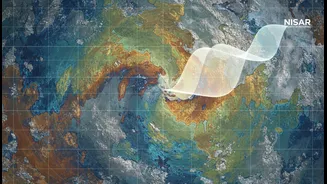
The potential applications are vast. An astronomy student at an Indian university could download Roman data to search for new planetary systems. A Bengaluru-based AI startup could develop algorithms to identify cosmic anomalies in the massive datasets. This model of international collaboration is already proven. The NASA-ISRO Synthetic Aperture Radar (NISAR) mission, a joint project to observe Earth, is built on the principle of shared data to tackle global challenges like climate change. The open archives from missions like Roman and Clipper extend this collaborative spirit to the entire cosmos. It’s an invitation for India's scientific talent to not just participate in space exploration, but to lead it from their own labs and laptops.