




The Breathable Waterproof Jacket
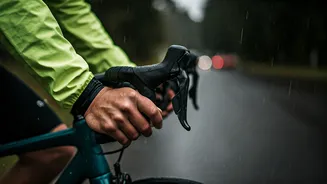
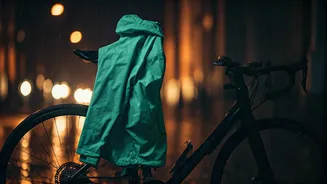
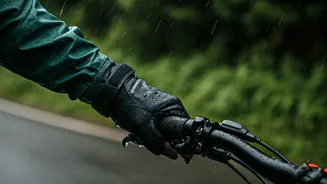
A high-quality waterproof jacket is your primary shield against the downpour. Look for one that is not just waterproof but also breathable. In India's humid monsoon climate, a non-breathable jacket will leave you soaked in sweat from the inside. Key features
to seek are a waterproof rating of at least 10,000mm to handle heavy showers, and a breathability rating of 10,000g/m²/24hr or more. [2, 5] Taped or sealed seams are non-negotiable, as they prevent water from seeping through the stitching. [5] Many cycling-specific jackets also feature a longer tail to protect against road spray and underarm vents or 'pit zips' for better temperature regulation. [3, 4]
Waterproof Trousers and Shoe Covers
While a jacket protects your top half, your legs and feet are most exposed to spray from the wheels. Waterproof trousers or cycling tights are essential for staying dry and avoiding chafing on longer rides. For shorter commutes, they can be worn over your regular clothes. Just as important are waterproof shoe covers. They slip over your regular cycling shoes, keeping your feet dry, warm, and comfortable. Wet feet can quickly lead to blisters and discomfort, making shoe covers a small investment for a massive improvement in ride quality.
Be Seen: High-Visibility and Reflective Gear
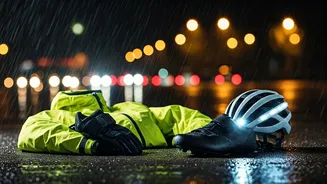
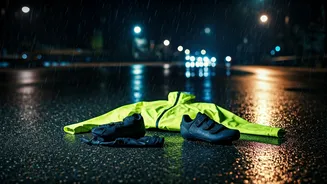
Rain and overcast skies drastically reduce visibility, making it harder for motorists to see you. [14] This is where high-visibility and reflective gear become critical safety equipment. [12, 11] During the day, fluorescent colours like yellow, orange, and bright green stand out against the grey environment. [17] For rides at dawn, dusk, or night, reflective gear is essential. This material uses retro-reflection to bounce light from sources like headlights directly back to the driver, making you appear brilliantly bright. [14] Look for jackets and vests with built-in reflective panels. Studies have shown that reflective elements placed on moving parts like your ankles and knees are especially effective, as the motion quickly identifies you as a cyclist. [17, 19, 20]
Essential Lights and Reflectors
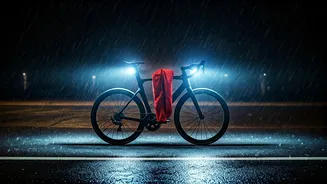
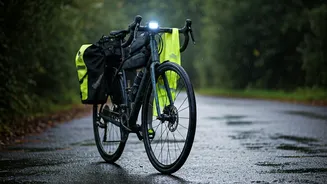
Your clothing is one layer of visibility; your bike is another. A powerful set of waterproof front and rear lights is a must-have for monsoon riding, even during the day. [7, 8] A white front light helps you see potholes or debris hidden by puddles, while a bright, flashing red rear light ensures you are seen by traffic approaching from behind. Modern LED lights are powerful, rechargeable, and built to withstand heavy rain. [25] To supplement your active lights, add passive reflectors to your bike, such as spoke reflectors that create a compelling circle of light when your wheels are in motion. [15]
Mudguards and Fenders
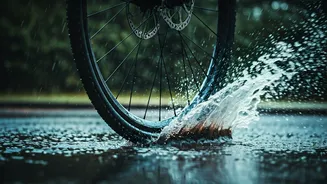
Mudguards, or fenders, are perhaps the most transformative accessory for wet-weather cycling. [7] They are simple plastic or metal guards that fit over your front and rear wheels, blocking the spray of muddy water that would otherwise soak you, your bike's components, and anyone riding behind you. A full-length set of mudguards provides the best protection and will make your monsoon rides significantly cleaner and more comfortable. They are an inexpensive addition that dramatically improves the experience of riding in the rain. [8, 11]
Bike Maintenance and Lubrication
Water is the enemy of your bike's drivetrain. The constant exposure to rain and road grime can wash away lubrication, leading to a noisy chain, poor shifting, and eventually, rust. [10] Before the season starts, and regularly during it, apply a 'wet' chain lubricant. [2] Unlike dry lube, wet lube is a thicker, more viscous oil that resists being washed off by water, providing durable protection for your chain and gears. [8] After every wet ride, it's crucial to wipe down your bike and chain and re-apply lube. This simple 5-minute routine will prevent long-term damage and keep your bike running smoothly. [10, 11]