



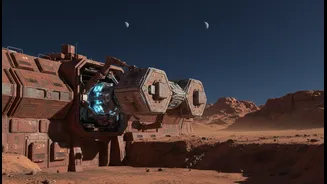


A New Strategy for Martian Exploration
On July 8, 2026, NASA announced it had selected seven companies for its Science Transport and Robotic Innovation for Deployment and Exploration (STRIDE) initiative. With a total potential value of around $17 million, these contracts represent a strategic
shift. Instead of developing all technology in-house, NASA is fostering public-private partnerships to create the advanced mobility systems needed for future missions. The goal is to develop robots that can travel farther and access scientifically rich regions that are currently out of reach for rovers like Curiosity and Perseverance. This approach aims to identify and fill capability gaps by leveraging the speed and innovation of the commercial sector, with work scheduled to begin in the fall of 2026.
The Seven Companies Leading the Charge
NASA cast a wide net, bringing in a diverse group of companies to tackle this challenge. The awardees include a mix of established aerospace players and innovative robotics firms. The seven companies selected are AeroVironment, Astrobotic, Venturi Astrolab, Ground Control Robotics, Honeybee Robotics, Intuitive Machines, and MEI Technologies. Each brings unique expertise, from a company like AeroVironment, which was instrumental in the success of the Ingenuity Mars helicopter, to Honeybee Robotics, known for creating robotic systems for planetary exploration. This selection highlights NASA's intent to encourage a broader range of solutions for navigating the Martian environment.
Conquering Difficult Martian Terrain
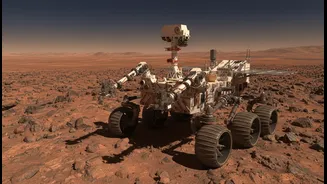
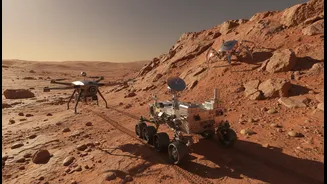
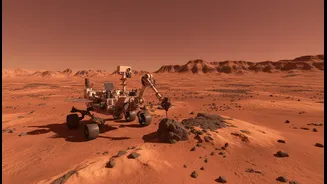
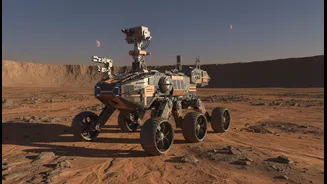
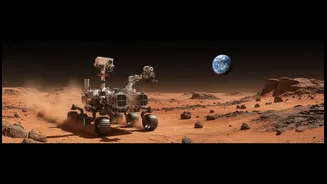
A primary focus of the STRIDE initiative is to solve one of the biggest hurdles in Martian exploration: mobility. Past rovers have struggled with sandy patches and steep, rocky slopes, limiting the areas they can study. These new contracts will fund the development of systems designed specifically for such 'difficult-to-reach' areas. While the specific technologies are in early development, this could include advancements like the shape memory alloy (SMA) spring tires NASA has been testing, which can deform and return to their original shape, or rovers with advanced suspension that can actively adjust weight distribution and use different 'gaits' like wheel-walking or squirming to climb over obstacles. The aim is to create rovers that are no longer confined to relatively flat crater floors, opening up vast new regions of Mars for scientific discovery.
Beyond the First Helicopter
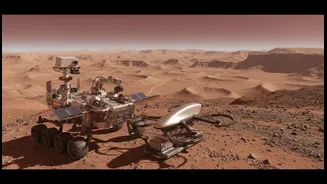
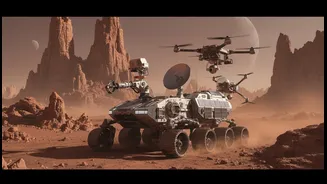
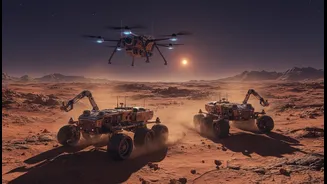
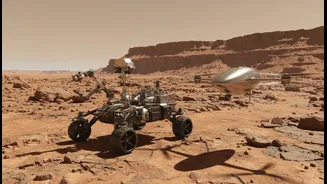
The incredible success of the Ingenuity helicopter proved that aerial exploration on Mars is possible. The STRIDE contracts aim to build on that legacy by developing the next generation of Martian drones. These future aerial platforms are expected to be more capable, potentially carrying scientific payloads to survey locations rovers can't reach. The program is seeking proposals for both surface and aerial technologies, signaling a two-pronged approach to mobility. Imagine a fleet of small, autonomous drones scouting ahead for a rover, or a single, more robust drone capable of collecting samples from a steep canyon wall. These are the kinds of possibilities that these new development contracts are designed to unlock, moving beyond a simple technology demonstration to create indispensable tools for exploration.
Smarter Robots for a Distant World
Enhanced mobility is only part of the equation. To truly explore challenging environments millions of miles from Earth, robots need to be smarter and more autonomous. The STRIDE program will also advance the 'brains' behind the machines. This involves developing better autonomous navigation systems and deep learning algorithms that allow a rover or drone to make its own decisions about the best and safest path forward. Prototypes like the ERNEST rover have already demonstrated significant advances, traversing many kilometers with minimal human intervention. By improving a robot's ability to perceive and understand its surroundings, NASA can reduce the communication delay and operational burden on mission controllers, allowing for faster, more efficient science missions.