





A Partnership Decades in the Making
The foundation of the India-US space relationship was built over decades, but it has accelerated dramatically in recent years. What began with policy discussions and the inclusion of American scientific instruments on India’s first lunar mission, Chandrayaan-1,
has evolved into a full-fledged strategic alignment. A key mechanism has been the India-U.S. Civil Space Joint Working Group (CSJWG), established in 2005 to steer bilateral cooperation. The partnership reached a new level with the U.S.-India initiative on Critical and Emerging Technology (iCET), which firmly places space collaboration at the heart of the strategic relationship between the two nations. This framework is designed to facilitate everything from joint missions to commercial partnerships, reflecting a shared vision for the future of space.
NISAR: A Landmark in Earth Observation
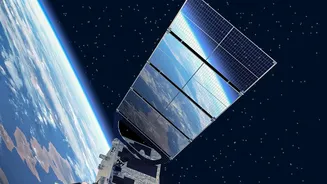
The most tangible symbol of this collaboration is the NASA-ISRO Synthetic Aperture Radar (NISAR) satellite, which launched successfully in July 2025. Hailed as the world's most expensive Earth-imaging satellite, NISAR is the first to use dual-frequency radars (an L-band from NASA and an S-band from ISRO) to map our planet. This powerful combination allows it to observe changes in Earth's land and ice surfaces with unprecedented detail, penetrating clouds and dense forests. Following its launch, NISAR entered a commissioning phase and is now in its science operations phase. Data from the satellite is crucial for monitoring natural disasters, managing resources, and understanding climate change impacts. ISRO began releasing S-band data products to the public in July 2026, marking a key milestone in the mission's operational life.
To the Moon and Beyond with Artemis
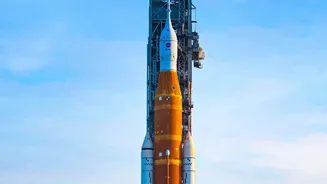
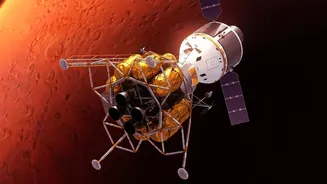
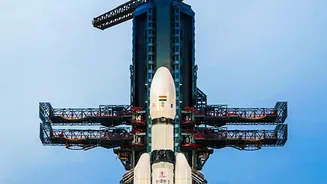
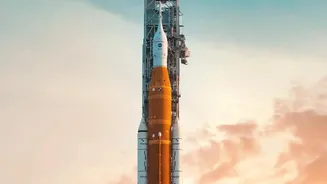
In a landmark decision, India became a signatory to the Artemis Accords in 2023, joining a U.S.-led coalition of nations committed to a common set of principles for peaceful and sustainable lunar exploration. This move signaled a strategic shift for India, moving from a traditionally independent stance to embracing collaborative global engagement in space. The partnership extends to human spaceflight, with NASA providing advanced training to Indian astronauts and plans for a joint mission to the International Space Station (ISS). Building on this deepening trust, NASA formally invited ISRO in August 2026 to participate in its Moon Base program, an ambitious effort to build a permanent outpost near the lunar south pole. This invitation came shortly after India's historic Chandrayaan-3 landing in the same region, making it a natural partner for the endeavor.
The Commercial and Strategic Frontiers
Beyond government agencies, the partnership is fostering a vibrant commercial space ecosystem. The U.S.-India Commercial Space Sub-Working Group aims to expand business-to-business engagement, with recent trade missions bringing leading American space companies to India to explore joint ventures and market opportunities. This collaboration is also underpinned by shared strategic interests. As space becomes an increasingly contested domain, both nations see the partnership as a way to ensure a free, open, and secure environment. It provides India with access to advanced technologies and strengthens its global standing, while the U.S. gains a capable and credible partner in the Indo-Pacific region.