






The Soaring Energy Demand
The engines of the internet are getting hungrier. According to a recent report from the International Energy Agency (IEA), global electricity consumption from data centres is set to more than double by 2030. A recent Gartner forecast projects that consumption will
reach 565 terawatt-hours (TWh) in 2026 alone, a significant jump from the previous year. To put that into perspective, the surge in demand from AI data centres alone over the next few years could be more than the entire annual electricity consumption of Great Britain. This dramatic increase is raising alarms among energy experts and policymakers, questioning whether our power grids can keep up and what this means for climate goals.
The AI Acceleration
The primary driver behind this explosive growth is the artificial intelligence boom. Training large AI models and running generative AI services like chatbots requires immense computational power, which translates directly to higher energy use. AI-optimised servers are significantly more power-intensive than traditional ones. The IEA identifies AI as the primary driver of this new demand, estimating that it will account for nearly three-quarters of the growth in data centre electricity use by 2030. While a simple Google search has a small energy cost, a query to an advanced AI can use up to ten times more electricity. This shift from simple data processing to complex, power-hungry computation marks a structural change in the digital economy.
India's Digital Dilemma
For India, a nation undergoing a massive digital transformation, the stakes are particularly high. The country's data centre capacity has nearly tripled since 2020 and is a major magnet for foreign investment. However, this growth is colliding with local realities. In India, data centres accounted for an estimated 150 billion litres of water use in 2024-25, a figure expected to more than double by 2030. Many new facilities are being built in regions already facing water scarcity, creating competition with communities and agriculture. Furthermore, with over half of India's electricity still generated from fossil fuels, particularly coal, a rapid expansion of data centres could complicate the country's climate commitments if not managed carefully. The fallback on coal-heavy grids when renewable energy isn't available is a significant concern.
A Hidden Environmental Cost
The impact isn't just about electricity and water. Data centres also produce a tremendous amount of heat. Research has shown that the concentration of these facilities can raise local land surface temperatures, contributing to the urban heat island effect already stressing many Indian cities. A recent Harvard study on US data centres revealed another issue: a lack of transparency. The study found that between May 2024 and April 2025, the 403 largest US data centres produced carbon emissions comparable to the entire country of Denmark, with over half their power coming from fossil fuels. Because operators rarely disclose facility-level energy data, calculating the true environmental cost of the digital services we use is incredibly difficult.
The Search for Greener Clouds
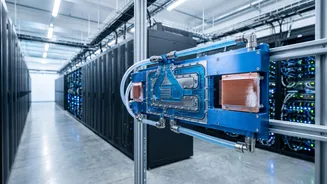
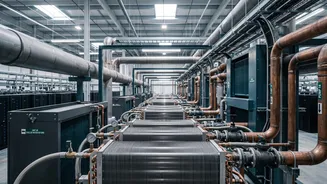
The industry is not standing still. There is a significant push towards 'green data centres' that are designed for sustainability from the ground up. Key strategies include powering facilities with renewable energy sources like solar and wind, implementing advanced cooling solutions to reduce energy waste, and adopting a 'circular economy' approach by reusing and recycling server components. Some innovative cooling techniques involve using outside air or even liquid immersion to cool servers far more efficiently than traditional air conditioning. However, the pace of AI's growth is so rapid that it threatens to outstrip these efficiency gains. While many major tech companies are the biggest corporate buyers of renewable energy, new research shows that in countries like the US and China, the demand is so high that new fossil fuel power plants are being planned specifically to power data centres.