






The Undeniable Power of Nostalgia
The primary driver behind this trend is the powerful pull of nostalgia. For audiences who grew up watching films like 'Dilwale Dulhania Le Jayenge' or 'Jab We Met', seeing them in a theatre is not just about the movie; it's about reliving a piece of their
youth. These films are tied to personal memories, and the act of re-watching them on a 70mm screen evokes a strong sense of comfort and emotional connection. In an increasingly uncertain world, the familiarity of these stories provides a sentimental escape. This isn't just about older generations; even Gen Z, who may have discovered these films on social media or streaming platforms, are eager to experience their iconic scenes and music in a communal setting for the first time.
A Different Era of Storytelling
Many fans feel that older films offer a different kind of emotional core and storytelling that they find lacking in some of today's cinema. Classics from the 90s and 2000s were often built around strong emotional plots, memorable music albums, and powerful dialogues that have stood the test of time. Ketan Maru, a distributor associated with 'Jab We Met', noted that contemporary films sometimes lack the deep-seated emotional scenes—tragedy, reunion, confrontation—that made older movies resonate so strongly with Indian sensibilities. As a result, audiences are craving the charm of old-school romantic dramas, masala entertainers, and classic comedies, finding them a refreshing change from current offerings.
The Unmatched Communal Experience
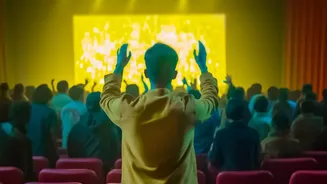
Even though most of these films are readily available on OTT platforms, fans are proving that the home viewing experience cannot replicate the magic of a packed theatre. Videos have gone viral showing audiences dancing in the aisles to 'Dilliwaali Girlfriend' during a re-release of 'Yeh Jawaani Hai Deewani' or reciting dialogues from 'Jab We Met' in unison. This shared experience is a significant draw. It’s a chance for fans to celebrate a film they love with hundreds of others who feel the same way, turning a simple movie screening into a cultural event. The energy of a collective audience laughing, crying, and cheering together is an experience in itself, one that streaming at home cannot offer.
A Savvy Business Strategy
From a business perspective, re-releasing classics is a low-risk, high-reward strategy for theatre owners and distributors. At a time when many new, big-budget films are underperforming, filling empty slots with proven hits makes perfect sense. The costs are minimal—mostly involving distribution and marketing—as the film is already made. The successful runs of films like 'Rockstar', 'Laila Majnu', and 'Gangs of Wasseypur' have shown that there is a dedicated audience willing to pay for tickets. Exhibitors have noted that while individual film collections might not be massive, they collectively contribute significant revenue and help keep theatres running, especially during periods with few new releases.
A Second Chance for Cult Classics
This trend has also given a new lease of life to films that were perhaps ahead of their time or didn't get their due at the box office on their initial release. Movies like 'Laila Majnu' and 'Tumbbad' developed a cult following over the years through word-of-mouth and streaming. Their re-releases saw impressive occupancy rates, with 'Laila Majnu' registering over 80% occupancy in some Mumbai theatres. This has allowed a new generation to discover these cinematic gems on the big screen and, in some cases, has even sparked discussions of sequels, as seen with the success of 'Tumbbad'.