






The Deceptive Comfort of the Tap
The rhythm of urban life is punctuated by the easy availability of water. Yet, every summer, the headlines tell a different story. Delhi grapples with a critically low Yamuna, Mumbai faces water cuts as reservoir levels plummet, and Bengaluru’s residents
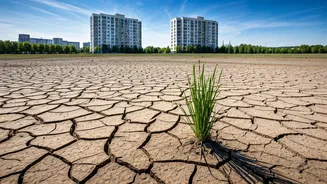
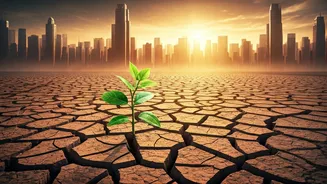
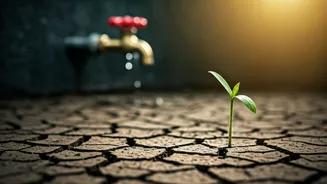
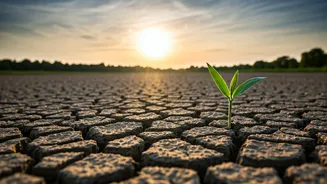
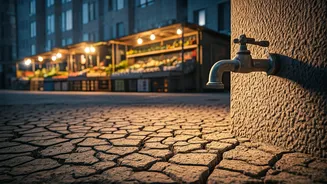
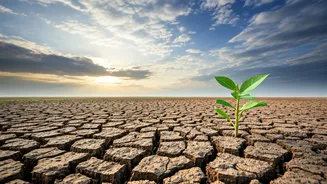
become dependent on the schedules of water tankers. For years, water scarcity was framed as a rural problem, a distant crisis affecting farmers in drought-prone regions. That is no longer true. When the nation's financial and tech hubs are struggling for water, it signals a systemic breakdown. The convenience of piped water in high-rises creates a profound disconnect. It feels like a manufactured product, infinite and guaranteed, when in fact it is a finite natural resource being stretched to its breaking point.
Defining the National Crisis
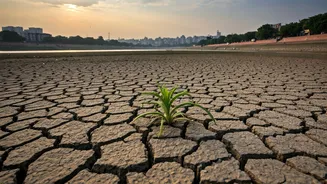
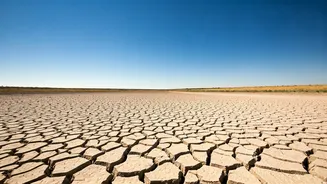
Experts define 'water stress' as a situation where annual per capita water availability drops below 1,700 cubic metres. India crossed that threshold years ago. According to the Central Water Commission, per capita water availability fell to around 1,486 cubic metres in 2021. Reports from NITI Aayog have repeatedly sounded the alarm, noting that nearly 600 million Indians face high-to-extreme water stress. This isn't a future projection; it is the current state of affairs. The crisis is predicted to worsen, with projections suggesting India's water demand could be double its available supply by 2030, potentially leading to a significant loss in the country's GDP.
The Hidden Journey of Urban Water
The water that fills urban tanks and pipes doesn't appear by magic. It is pulled from increasingly distant and depleted sources. Cities are heavily reliant on groundwater, which serves nearly half of the urban water supply. This over-extraction is causing groundwater levels to plummet in major cities, including Delhi, Chennai, and Hyderabad. This invisible crisis has visible consequences. As underground aquifers are emptied faster than they can be replenished by rain, the land above begins to sink—a phenomenon called subsidence that threatens the structural integrity of thousands of buildings. Furthermore, this urban thirst places city dwellers in direct competition with rural communities, who depend on the same groundwater for over 60% of their agricultural needs and 85% of their domestic supply.
A Failure of Management, Not Just Rain
While climate change and erratic monsoons are factors, the urban water crisis is largely a man-made disaster rooted in poor management. Cities have expanded rapidly, paving over lakes, wetlands, and open ground that once acted as natural sponges, allowing rainwater to seep underground and recharge aquifers. Bengaluru, which once boasted over 260 lakes, now has only a fraction of them, with many lost to urban sprawl. Compounding the issue are dilapidated distribution networks that leak vast quantities of treated water—often called 'non-revenue water'—before it ever reaches a single home. The focus has historically been on finding new, ever-more-distant sources of water rather than efficiently managing, recycling, and conserving what is already available.
Shifting from Consumption to Conservation
The path to a water-secure future requires a fundamental shift in perspective. The solution lies not just in government policy but in reimagining our relationship with water. Experts point to a suite of solutions that must become standard practice. Rainwater harvesting should be integral to all new buildings, not an afterthought. Restoring urban water bodies can create local, resilient water sources. Crucially, cities must embrace a 'circular water economy' by treating and reusing wastewater for industrial, construction, and landscaping purposes, significantly reducing the strain on fresh water sources. Simple measures like water audits, rational pricing to discourage waste, and community-led conservation efforts can collectively make a massive difference.