







The Core of Coordinated Movement
Rhythm is more than just tapping your foot to a song; it's the body's ability to organize movement in time. For both dancers and rowers, rhythm provides a structure that turns a series of actions into a single, flowing effort. It dictates when to move,
when to pause, and when to apply force. In dancing, this is often a response to external music, while in rowing, it's about creating an internal, synchronized pulse. Mastering this skill enhances coordination, improves memory for complex sequences, and ultimately separates novices from experts in any physical discipline.
Rowing: The Engine's Synchronized Pulse
In rowing, rhythm is the key to efficiency and speed. It's often referred to as 'swing', a near-mystical state where the entire crew moves as one. The core of rowing rhythm is a specific ratio: the recovery phase should take about twice as long as the power phase, or drive. This 1:2 ratio of work to rest allows the boat to glide optimally between strokes. A crew finds its rhythm from the stroke seat (the rower at the very back) or the coxswain, who acts as a human metronome. When this rhythm is broken, the boat's balance is disturbed, and speed is immediately lost. Any movement out of sync, such as a rower's body weight shifting at the wrong moment, actively slows the boat down.
Dancing: Expression Through Musicality
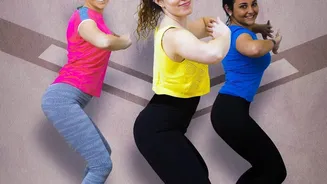
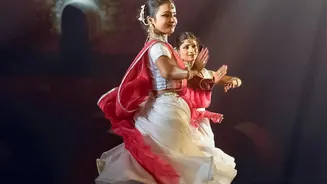
For a dancer, rhythm is the roadmap provided by music. The most common structure is counting in sets of eight, which helps a dancer align their movements with the beat. However, great dancing goes beyond simply staying on time; it involves musicality, which is the ability to interpret and express the music's emotion and texture through movement. A dancer might use a sharp, sudden movement to accent a drum beat or a flowing turn to match a smooth melody. Unlike the singular, repetitive rhythm of rowing, dance often involves complex patterns, syncopation, and tempo changes, requiring the dancer to constantly listen and adapt. The goal is not just synchronization, but creative expression.
Internal vs. External Pacing
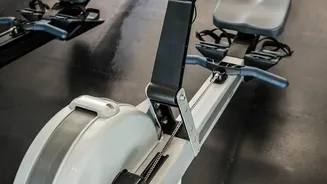
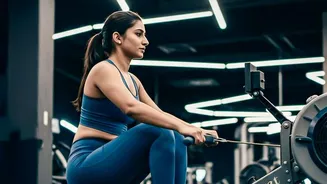
The biggest distinction lies in the source of the rhythm. A dancer's primary pacemaker is external: the music. Their performance is a reaction to and interpretation of an audible beat. Developing this skill involves learning to listen deeply to musical layers and patterns. A rower's rhythm, conversely, is largely internal and kinesthetic. In a crew, they must feel the movement of the boat and the bodies around them, synchronizing without an external soundtrack. Even when using tools like a coxswain's calls or an indoor rowing machine's stroke rate display, the focus is on generating a consistent, powerful sequence from within the body: legs, body, then arms on the drive; arms, body, then legs on the recovery.
The Price of a Missed Beat
In both activities, poor timing has immediate consequences. For a rower, a mistimed stroke can 'check' the boat, causing it to lurch and lose momentum. An oar catching the water at the wrong time can disrupt the entire crew's balance. The result is measurable: a slower speed and a feeling that the boat is heavy and sluggish. For a dancer, a missed beat can mean stumbling, failing to execute a turn, or disconnecting from a partner. In a group performance, it breaks the visual uniformity that makes choreography so powerful. While a dancer's misstep affects aesthetic flow, a rower's mistake directly impacts the physics of their performance.
Can a Rower Dance? Can a Dancer Row?
The skills are surprisingly transferable. Dancers possess incredible body awareness, balance, and an innate ability to learn and repeat specific movements, which would be a huge asset in a rowing shell. Their experience synchronizing with external cues can help them adapt to the timing of a crew. Conversely, rowers can benefit from dance training to improve flexibility and balance. An activity like rowing is excellent cross-training for dancers, building cardiovascular endurance and full-body strength that complements their primary discipline. The main challenge in switching is adapting the goal: a rower must learn to be expressive and varied, while a dancer must learn to channel their rhythmic sense into a singular, repetitive, and powerful motion.