



The Scale of the Challenge
The numbers are sobering. India wastes an enormous amount of food annually, with some estimates putting the figure as high as 70 million tonnes. A significant portion of this loss, around 40%, happens before food even reaches consumers due to supply chain
inefficiencies. However, household waste is also a major contributor, with one UN report estimating that each person in India wastes around 55 kg of food per year. This isn't just an economic loss amounting to crores; it's a social and environmental crisis. Wasted food contributes significantly to greenhouse gas emissions through methane released from landfills, while millions still face malnutrition.
The Digital Champions of Waste-Free Cooking
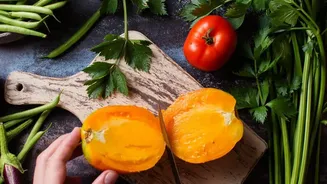
Frustrated by this disconnect, young Indians are turning to a familiar tool for change: social media. A growing tribe of chefs and influencers are using Instagram and YouTube to make zero-waste cooking cool, accessible, and delicious. Chefs like Radhika Khandelwal of Fig & Maple and Vanshika Bhatia have become prominent voices, sharing creative recipes for things often discarded, like vegetable peels and rinds. Influencers such as Vani Murthy, known as Bengaluru's 'compost queen', have gathered hundreds of thousands of followers by demonstrating simple techniques for composting, creating bio-enzymes from citrus peels, and other 'waste-to-wealth' hacks. Their message is clear: the bits we normally throw away, from coriander stems to cauliflower leaves, are not trash but ingredients waiting to be used.
Innovators and Entrepreneurs
Beyond social media, young innovators are building startups to tackle the problem at a systemic level. Teenager Sakshi's 'The Farm Theory' in Karnataka is a prime example. Her venture buys 'ugly' or non-standard produce directly from farmers—items that would otherwise be rejected—and sells them to restaurants and canteens, ensuring farmers get a better price and reducing on-farm waste. Elsewhere, startups like BillionCarbon, co-founded by siblings Ankita and Nikhil Vijayvergiya, are using technology like IoT-enabled bioreactors to convert food waste into valuable products like biofertilizer and insect protein. These youth-led enterprises show that a circular economy for food is not just an ideal but a viable business model.
A Return to Community Roots
The movement is also about reconnecting with community. Across cities like Mumbai, Bengaluru, and Delhi, young people are driving community composting initiatives in their housing societies and neighbourhoods. Organisations like Earth5R have successfully engaged thousands of families in Mumbai, teaching them to segregate kitchen scraps and turn them into valuable compost. This collective action not only diverts tonnes of waste from landfills but also fosters a shared sense of responsibility. It's a modern revival of a traditional Indian value: respecting resources and ensuring nothing goes to waste.